Louis Sullivan
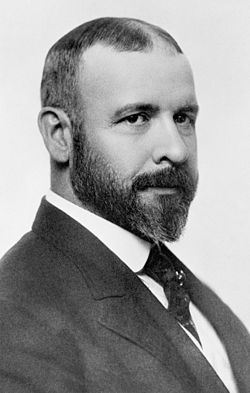
Louis Henry Sullivan was an American architect, and has been called a "father of skyscrapers" and "father of modernism". He was an influential architect of the Chicago School, a mentor to Frank Lloyd Wright, and an inspiration to the Chicago group of architects who have come to be known as the Prairie School. Along with Wright and Henry Hobson Richardson, Sullivan is one of "the recognized trinity of American architecture." The phrase "form follows function" is attributed to him; it encapsulated earlier theories of architecture and he applied them to the modern age of the skyscraper.
Background
- Born in
- Boston
- Educated at
- Massachusetts Institute of TechnologyBeaux-Arts de ParisBoston English High School
- Awards
- 🏆 Fellow of the American Institute of Architects
Trending & Selected Quotes
Trending topics shown first"How strange it seems that education, in practice, so often means suppression: that instead of leading the mind outward to the light of day it crowds things in upon it that darken and weary it. Yet evi…"
"What are books but folly, and what is an education but an arrant hypocrisy, and what is art but a curse when they touch not the heart and impel it not to action?"
"We are rounding out our absorbing study of Democracy. Thus, turning slowly upon the momentous axis of our theme, are we coming more and more fully into the light of our sun: the refulgent and resplend…"
"An architect, to be a true exponent of his time, must possess first, last and always the sympathy, the intuition of a poet … this is the one real, vital principle that survives through all places and …"
Works & Publications
No works or publications documented yet.
Timeline
1856
Born
Birth1924
Died
Death
Influenced By
Thinkers whose ideas shaped Louis's philosophy
No known influences documented.
Influenced
Thinkers whose work was shaped by Louis's ideas
No influenced thinkers documented yet.
Source Attribution
Information about Louis Sullivan is sourced from curated knowledge bases and cross-referenced for accuracy. Influence relationships are scored by thematic overlap and historical plausibility.