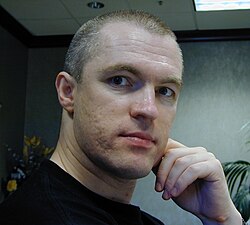
Elisha Gray
Elisha Gray was an American electrical engineer who co-founded the Western Electric Manufacturing Company. Gray is best known for his development of a telephone prototype in 1876 in Highland Park, Illinois. Some recent authors have argued that Gray should be considered the true inventor of the telephone because Alexander Graham Bell allegedly stole the idea of the liquid transmitter from him.
Background
- Born in
- Barnesville
- Educated at
- Oberlin College
- Awards
- 🏆 Elliott Cresson Medal🏆 National Inventors Hall of Fame
Trending & Selected Quotes
Trending topics shown first"The sponge, whether considered as a single or compound animal, has the power to reproduce itself, and here the mystery of life is as much hidden as it is in God's highest creation. It has been stated …"
"The world is now rapidly advancing in light, in knowledge, in power to use the infinite gifts that the Creator has hidden in nature; but hidden only to stimulate and reward our seeking. Every man can …"
"Science has no prejudices — though scientists often do. Science is like figures: they do not lie themselves, but the men who figure are often the greatest liars in the world."
"It is the province of the scientist to reveal the facts of nature as they now exist, and leave the rest to the speculation of the philosopher and the theologian. The growth of vegetation made it possi…"
"What shall we say of the Intelligence that plans all this? Can the Creator be less than the creature? Shall we not say that Intelligence is indestructible, and its measure is its Power to adapt means …"
Works & Publications
No works or publications documented yet.
Timeline
1835
Born
Birth1901
Died
Death
Influenced By
Thinkers whose ideas shaped Elisha's philosophy
No known influences documented.
Influenced
Thinkers whose work was shaped by Elisha's ideas
No influenced thinkers documented yet.
Source Attribution
Information about Elisha Gray is sourced from curated knowledge bases and cross-referenced for accuracy. Influence relationships are scored by thematic overlap and historical plausibility.