James Jeans
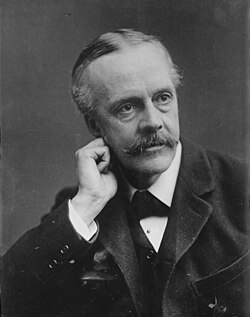
Sir James Hopwood Jeans was an English physicist, mathematician and an astronomer. He served as a secretary of the Royal Society from 1919 to 1929, and was the president of the Royal Astronomical Society from 1925 to 1927, and won its Gold Medal.
Background
- Born in
- Ormskirk
- Educated at
- University of CambridgeTrinity College
- Awards
- 🏆 Order of Merit🏆 Adams Prize🏆 Royal Medal🏆 Gold Medal of the Royal Astronomical Society
- Doctoral Advisors
- 🎓 E. T. Whittaker
- Doctoral Students
- 📖 Ronald Fisher
Trending & Selected Quotes
Trending topics shown first"We saw that radiation cannot suitably be pictured as particles when it is traveling through space. There is a corresponding property for electrons; these should not be pictured as waves so long as the…"
"In every previous application of the quantum law, Planck's law, that the energy is h times the frequency, had been used to deduce the energy of a quantum when the frequency of the radiation was alread…"
"It can hardly be a matter for surprise that our race has not succeeded in solving any large part of its most difficult problems in the first millionth part of its existence. Perhaps life would be a du…"
"Life exists in the universe only because the carbon atom possesses certain exceptional properties."
"...a detailed mathematical discussion shows that whatever kind of wave-packet we select to represent the electron, the product of the two uncertainties of position and momentum can never be less than …"
"Faraday, Maxwell, Larmor and a great number of others tried to explain electromagnetic action on these lines, but all attempts failed, and it began to seem impossible that any properties of ether coul…"
Works & Publications
No works or publications documented yet.
Timeline
1877
Born
Birth1946
Died
Death
Influenced By
Thinkers whose ideas shaped James's philosophy

Influenced
Thinkers whose work was shaped by James's ideas


Source Attribution
Information about James Jeans is sourced from curated knowledge bases and cross-referenced for accuracy. Influence relationships are scored by thematic overlap and historical plausibility.