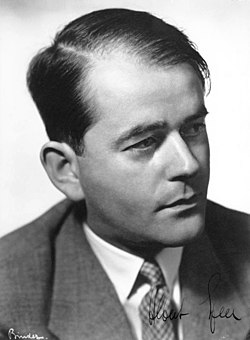
Albert Speer
Berthold Konrad Hermann Albert Speer was a German architect who served as Minister of Armaments and War Production in Nazi Germany during most of World War II. A close friend and ally of Adolf Hitler, he was convicted at the Nuremberg trials and served 20 years in prison.
Background
- Born in
- Mannheim
- Educated at
- Technische Universität Berlin
Trending & Selected Quotes
Trending topics shown first"Around the middle of February, I called on Goering one evening in Karinhall. I had discovered from studying the military map that he had concentrated his parachute division around his hunting estate. …"
"In contrast to the ultimate realization that he was dealing with a formidable enemy in the east, Hitler clung to the end to his preconceived opinion that the troops of the Western countries were poor …"
"At this time a high-ranking SS leader hinted to me that Himmler was preparing decisive steps. In February 1945, the Reichsführer-SS had assumed command of the Vistula Army Group, but he was no better …"
"The tremendous danger, however, contained in this totalitarian system only became abundantly clear at the moment when we were approaching the end. It was then that one could see what the meaning of th…"
"So long as Hitler had temperamental outbursts of hate, there was yet hope for a change towards more moderate directions. Therefore, it was the resoluteness and coldness which made his outbreaks agains…"
"20 years. Well … that's fair enough. They couldn't have given me a lighter sentence, considering the facts, and I can't complain. I said the sentences must be severe, and I admitted my share of the gu…"
Works & Publications
No works or publications documented yet.
Timeline
1905
Born
Birth1981
Died
Death
Influenced By
Thinkers whose ideas shaped Albert's philosophy
No known influences documented.
Influenced
Thinkers whose work was shaped by Albert's ideas
No influenced thinkers documented yet.
Source Attribution
Information about Albert Speer is sourced from curated knowledge bases and cross-referenced for accuracy. Influence relationships are scored by thematic overlap and historical plausibility.


