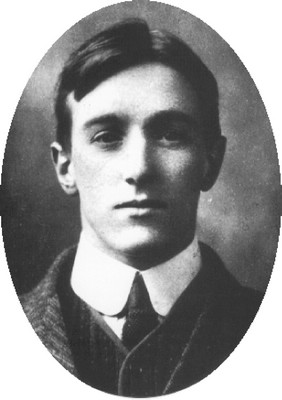
R. G. Collingwood
Robin George Collingwood was an English philosopher, historian and archaeologist. He is best known for his philosophical works, including The Principles of Art (1938) and the posthumously published The Idea of History (1946).
Career Journey
Background
- Born in
- Cartmel Fell
- Educated at
- University College, OxfordRugby School
- Doctoral Advisors
- 🎓 Francis J. Haverfield
Trending & Selected Quotes
Trending topics shown first"For I do not think of aesthetic theory as an attempt to investigate and expound eternal verities concerning the nature of an eternal object called Art, but as an attempt to reach, by thinking, the sol…"
"Time, as succession of past, present and future, really has its being totum simul for the thought of a spectator, and this justifies its ‘spatialized’ presentation as a line of which we can see the wh…"
"The real is the present, conceived not as a mathematical point between the present and the past, but as the union of present and past in a duration or permanence that is at the same time change. Thus …"
"The general conception here maintained is not new; it is one already familiar from the works of Coleridge, Croce and many others; it is the view that art is at bottom neither more nor less than imagin…"
"The word art has in ordinary usage three senses. First, it means the creation of objects or the pursuit of activities called works of art, by people called artists ; these works being distinguished fr…"
"One of Collingwood's earliest attempts to define the aesthetic essence of art. His aim, he writes in the preface, is to state a general conception of art and develop its consequences. His conception i…"
Works & Publications
No works or publications documented yet.
Timeline
1889
Born
Birth1943
Died
Death
Influenced By
Thinkers whose ideas shaped R.'s philosophy
No known influences documented.
Influenced
Thinkers whose work was shaped by R.'s ideas
No influenced thinkers documented yet.
Source Attribution
Information about R. G. Collingwood is sourced from curated knowledge bases and cross-referenced for accuracy. Influence relationships are scored by thematic overlap and historical plausibility.