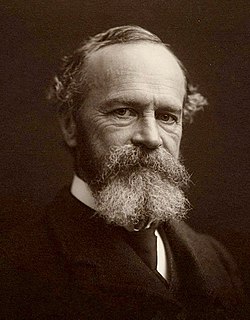
Erving Goffman
Erving Goffman was a Canadian-born American sociologist, social psychologist, and writer, considered by some "the most influential American sociologist of the twentieth century".
Career Journey
Background
- Born in
- Mannville
- Educated at
- University of ChicagoUniversity of TorontoUniversity of ManitobaSt. John's High School
- Awards
- 🏆 Guggenheim Fellowship
- Doctoral Students
- 📖 Eviatar Zerubavel
Trending & Selected Quotes
Trending topics shown first"But, When persons are present to one another they can function not merely as physical instruments but also as communicative ones. This possibility, no less than the physical one, is fateful for everyo…"
"For over a decade now in the literature of social psychology there has been good work on stigma - the situation of the individual who is disqualified from full social acceptance. This work has been ad…"
"A total institution may be defined as a place of residence and work where a large number of like-situated individuals, cut off from the wider society for an appreciable period of time, together lead a…"
"There seems to be no agent more effective than another person in bringing a world for oneself alive, or, by a glance, a gesture, or a remark, shriveling up the reality in which one is lodged."
"The self... is not an organic thing that has a specific location, whose fundamental fate is to be born, to mature, to die; it is a dramatic effect arising diffusely from a scene that is presented."
"In conclusion, may I repeat that stigma involves not so much a set of concrete individuals who can be separated into two piles, the stigmatized and the normal, as a pervasive two-role social process i…"
Works & Publications
No works or publications documented yet.
Timeline
1922
Born
Birth1982
Died
Death
Influenced By
Thinkers whose ideas shaped Erving's philosophy
No known influences documented.
Influenced
Thinkers whose work was shaped by Erving's ideas
No influenced thinkers documented yet.
Source Attribution
Information about Erving Goffman is sourced from curated knowledge bases and cross-referenced for accuracy. Influence relationships are scored by thematic overlap and historical plausibility.