#time

"Rudolf Hess, Hitler's future deputy, who recently had moved to Munich and now lived in Elisabethstraße, close to the barracks in which Hitler resided at the time, did not think that the Soviet Republic was something worth getting upset about... Hess wrote to his parents on April 23. 'I have not experienced any unrest at all. Yesterday we had an orderly march with red flags, nothing else out of the ordinary.'"

quotekg

React to this quote

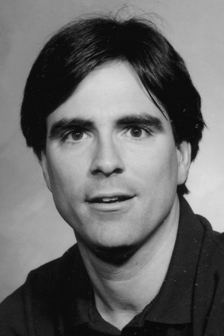
More by Thomas Weber (historian)

See all

“n surviving film footage of Eisner’s funeral we see Hitler with a few men from his unit walking behind Eisner’s coffin in the funeral procession of the Bavarian leader. We clearly see Hitler wearing two armbands: one black band to mourn the death of Eisner and the other a red armband in the colour of the Socialists revolution. Similarly, Hitler appears on one of Heinrich Hoffman’s photographs of the funeral process for Eisner.”

“Exploiting the fears among Munich’s new rulers about a repeat of the Munich Soviet Republic, volunteered to become an informant for the new masters of the city. By becoming a turncoat, he managed against all odds, not only to escape decommissioning and thus to escape an uncertain future, but also to emerge strengthened from a situation that otherwise might have resulted in deportation to his native Austria, imprisonment, or even death.”

“Soldiers in Munich had been oscillating between supporting the moderate left, that is, the SPD, and the radical left in its different incarnations, not between left-wing and right-wing ideology. After all, more than 90 percent of soldiers in Hitler’s unit had voted for either the moderate or the radical left in the Bavarian elections in January .”

“On April 27, the troops that Hoffmann and Noske had amassed—a formidable force of thirty thousand men—crossed into Bavaria… On the following day, mass desertion in the Red Army set in. Hitler, however, did not defect. Furthermore a sufficiently large number of men stayed behind for Rudolf Egelhofer to organize a last stand.”

“At his military HQ would be recorded as saying on February 1, 1942, ‘The only problem for the Social Democrats at the time was that they did not have a leader.’”

“As the rope tightened around the neck of the Soviet Republic in late April, life for any real or perceived counterrevolutionaries left in Munich grew very dangerous indeed. For instance, on April 29 and the following day, revolutionaries showed up at the neoclassical palace on Brienner Straße that housed the papal nunciature, entering the building and threatening the nuncio, Eugenio Pacelli, with guns, daggers and even hand grenades. Pacelli was hit so hard in his chest with a revolver that it deformed the cross that he carried on a chain around his neck. The attack on the future Pope Pius XII was not the only reported case of aborted action taken against real or perceived adversaries of the Soviet Union.”