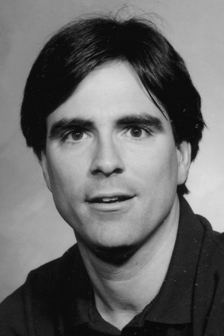
"The "second order cyberneticians" claimed that knowledge is a biological phenomenon , that each individual constructs his or her own "reality" and that knowledge "fits" but does not "match" the world of experience ."

More by Stuart A. Umpleby
See allResonant Thoughts
"The whole thing is so much bigger than I am, and I can't understand it, so I just trust myself to it; and forget about it."
Explore Further
Related Quotes
"Sir, I salute your courage, your strength, your indefatigability, and I want you to know that we are with y…"
— Saddam Hussein"Rosenberg was completely areligious. That was the deepest of his defects. Rosenberg has a one-track mind. H…"
— Alfred Rosenberg"I would rather be a woman without a vote and yet know HOW to vote, than to be a man who HAS a vote and hasn…"
— Gertrude Breslau Hunt"scarce looked upon as Academical studies but rather Mechanical... And among more than two hundred students …"
— John Wallis"Aren't you missing a lot of fun? You know, one's young for such a little while."
— W. Somerset Maugham"If you want to know everything about the market, go to the beach. Push and pull your hands with the waves. …"
— Ed Seykota