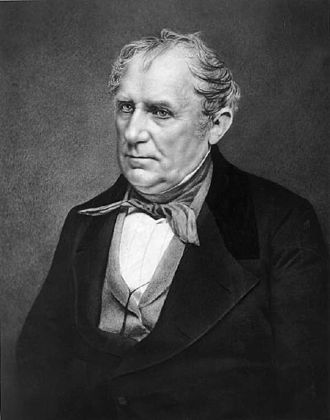
"I do not pretend to understand why such a sacrifice should be necessary, but I believe it, feel it; and believing and feeling it, I cannot but adore and worship the Son, who quitted heaven to come on earth, and suffered, that we might possess eternal life. It is all mystery to me, as is the creation itself, our existence, God himself, and all else that my mind is too limited to comprehend. But, Roswell, if I believe a part of the teachings of the Christian church, I must believe all. The apostles, who were called by Christ in person, who lived in his very presence, who knew nothing except as the Holy Spirit prompted, worshiped him as the Son of God, as one 'who thought it not robbery to be equal with God;' and shall I, ignorant and uninspired, pretend to set up my feeble means of reasoning, in opposition to their written instructions!"… I do not deny that we are to exercise our reason, but it is within the bounds set for its exercise. We may examine the evidence of Christianity, and determine for ourselves how far it is supported by reasonable and sufficient proofs; beyond this we cannot be expected to go, else might we be required to comprehend the mystery of our own existence, which just as much exceeds our understanding as any other. We are told that man was created in the image of his Creator, which means that there is an immortal and spiritual part of him that is entirely different from the material creature One perishes, temporarily at least--a limb can be severed from the body and perish, even while the body survives; but it is not so with that which has been created in the image of the deity. That is imperishable, immortal, spiritual, though doomed to dwell awhile in a tenement of clay. Now, why is it more difficult to believe that pure divinity may have entered into the person of one man, than to believe, nay to feel, that the image of God has entered into the persons of so many myriads of men?"
React to this quote
More by James Fenimore Cooper
See allResonant Thoughts
"Man aspires to govern nature, but the more one studies ecology, the more absurd it seems to speak of any one feature of an organism, or of an organism/environment field, as governing or ruling others.…"
"Our youth have defied and derided a regime which is not mindful of their future but is obsessed with the hereafter. The Iranian youth keep defending their right to live their age and the epoch in whic…"
Explore Further
Related Quotes
"This life is for loving, sharing, learning, smiling, caring, forgiving, laughing, hugging, helping, dancing…"
— Steve Maraboli"At the chemical level, human beings just aren’t all that different from pumpkins or any other life forms."
— Harold J. Morowitz"O, Koh, the limerick is the unrefiner's fire. It is as false and lifeless, as anonymous, as a rubber snake,…"
— William H. Gass"Life is only a flicker of melted ice."
— Dejan Stojanovic"It's okay. We aren't in the same class. Just don't forget that some of us watch the sunset too."
— S.E. Hinton"Life is a drama full of tragedy and comedy. You should learn to enjoy the comic episodes a little more."
— Jeannette Walls





