"An organization can secure the efforts necessary to its existence, then, either by the objective inducements it provides or by changing states of mind. It seems to me improbable that any organization can exist as a practical matter which does not employ both methods in combination. In some organizations the emphasis is on the offering of objective incentives — this is true of most industrial organizations. In others the preponderance is on the state of mind — this is true of most patriotic and religious organizations."
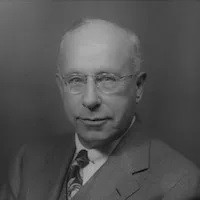
More by Chester Barnard
See allResonant Thoughts
"It is by self-reliance, humanly speaking, by the independence which has been the motive and impelling force of our race, that the Scots have thriven in India and in Canada, in Australia and New Zealan…"
Explore Further
Related Quotes
"What to leave out is the first thing the artist has to decide; a painter who “held the mirror up to nature”…"
— Randall Jarrell"One person I do feel a little sorry for, though, is the Archbishop of Canterbury, the most important clergy…"
— Pat Condell"Performing, for me, is like oxygen. Performing, for me, is like the only thing that is a constant in my lif…"
— Skye Sweetnam"I must interpret the life about me as I interpret the life that is my own. My life is full of meaning to me…"
— Albert Schweitzer"It isn’t given to very many men to have their dreams come true in their lifetimes."
— Algis Budrys"Everyone recognized that only five percent of all the people born ever amount to anything at all. Everyone …"
— Mark Clifton


