#life
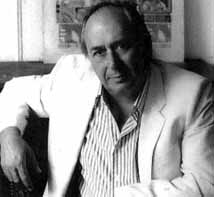
"The uneasy marriage of reason and nightmare which has dominated the 20th century has given birth to an increasingly surreal world. More and more, we see that the events of our own times make sense in terms of surrealism rather than any other view — whether the grim facts of the death-camps, Hiroshima and Viet Nam, or our far more ambiguous unease at organ transplant surgery and the extra-uterine foetus, the confusions of the media landscape with its emphasis on the glossy, lurid and bizarre, its hunger for the irrational and sensational. The art of Salvador Dalí, an extreme metaphor at a time when only the extreme will do, constitutes a body of prophecy about ourselves unequaled in accuracy since Freud's "Civilization And Its Discontents". Voyeurism, self-disgust, the infantile basis of our fears and longings, and our need to pursue our own psychopathologies as a game — these diseases of the psyche Dali has diagnosed with dismaying accuracy. His paintings not only anticipate the psychic crisis which produced our glaucous paradise, but document the uncertain pleasures of living within it. The great twin leitmotifs of the 20th century — sex and paranoia — preside over his life, as over ours."
React to this quote
More by J. G. Ballard
See allResonant Thoughts
Explore Further
Related Quotes
"Economic theory makes a fundamental assumption that maximizing profits is the basic objective of every firm…"
— Joel Dean"Inclusion creates economic growth. So the neoliberal idea that inclusion is this fancy luxury to be afforde…"
— Nick Hanauer"The advantage of poetry over life is that poetry, if it is sharp enough, may last."
— Louise Glück"I loved him and will always love him. He was like a brother to me. He was this little broken but gentle spi…"
— Susan Silver"Anita – I am so glad I'm out here – I can't tell you how much I like it. I like the plains – and I like the…"
— Georgia O'Keeffe"My illness is alive, the threats to my life are real; yet it is only my death I feel, only the lessening ma…"
— William H. Gass





