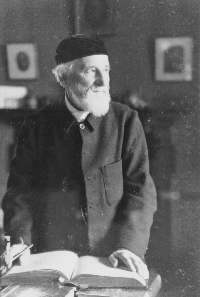
"In the interpretation of figurative passages, let the following canon be observed. If the passage be preceptive, either forbidding some flagitious deed and some heinous crime, or commanding something useful and beneficent: then such passage is not figurative. But, if the passage seems, either to command some flagitious deed and some heinous crime, or to forbid something useful and beneficent: then such passage is figurative. Thus, for example, Christ says: Unless ye shall eat the flesh of the Son of man, and drink his blood; ye shall have no life in you. Now, in these words, he seems to command a heinous crime or a flagitious deed. Therefore the passage is a figure, enjoining us to communicate in the passion of our Lord, and admonishing us to lay it up sweetly and usefully in our memory because, for us, his flesh was crucified and wounded. On the other hand, Scripture says: If thy enemy shall hunger, give him food; if he shall thirst, give him drink. Here, without all doubt, an act of beneficence is enjoined."
React to this quote
More by George Stanley Faber
See allResonant Thoughts
"I have never in my whole life had a fight with a smart person or even seen anybody else have one either. That is because when the fight starts the smart people are not there anymore. They have gone of…"
Explore Further
Related Quotes
"Winning the IBF title was the greatest night of my life. To give it up outside the ring is truly painful."
— Ricky Hatton"hurry up and bring on your electric chair I want to leave here and take a nose-dive into the next world jus…"
— Carl Panzram"We may indeed ask ourselves how it is that capitalism and free enterprise enable the United States not only…"
— Winston Churchill"Part of life has a public orientation, but part of it does not. He has a private self that looks inward, an…"
— Richard Weaver"The Eisenhower Center for American Studies"
— Dwight D. Eisenhower"The true potential of an augmented life is revealed when it provides us with the information we need, at ex…"
— Jay Samit