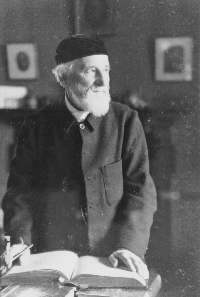
"We live in stormy and unsettled times. Hence we may confer a benefit, not only on ourselves, but on others, by diverting attention from the exciting circumstances of the present day—from the disheartening eccentricities of a literature which meanders in a thousand frivolous directions—to the calm regions where the inner man, self-examined, submits himself to moral treatment. Here our connection with things, our object, our duty, become clear; and, while we quietly separate ourselves from a world which is unable to assure us of anything, we feel that the joy we thought lost again returns, and that a second innocence spreads its clear and tranquillizing light over human existence. The child may amuse himself with childish rhymes. Man should find his recreation in reflecting on his relation to the things of this life. To all has this power been vouchsafed; by all should it be exercised."
More by Ernst
See allResonant Thoughts
"One of the things we see as we glance over history is that creature consciousness is always absorbed by culture. Culture opposes nature and transcends it. Culture is in its most intimate intent a hero…"
Explore Further
Related Quotes
"A moment's reflection will show that India's case is not at par with the ones we have been considering. For…"
— Arun Shourie"Yes, Afghanistan is composed of 18 different communities marked by ethnic, linguistic and religious differe…"
— Amir Taheri"When I was little in Spokane, Washington I drew all the time... and my father would bring paper home ... an…"
— David Lynch"Some people love my work, some people hate it…You can’t be liked by everybody. There has been opposition in…"
— Fernando Botero"It was like a vacation, one he hadn't planned for, but one that left him feeling more rested than he had in…"
— Nicholas Sparks"Have I done something for the general interest? Well then I have had my reward. Let this always be present …"
— Marcus Aurelius