"Education can help us only if it produces “whole men”. The truly educated man is not a man who knows a bit of everything, not even the man who knows all the details of all subjects : the “whole man” in fact, may have little detailed knowledge of facts and theories, he may treasure the Encyclopædia Britannica because “she knows and he needn’t”, but he will be truly in touch with the centre. He will not be in doubt about his basic convictions, about his view on the meaning and purpose of his life. He may not be able to explain these matters in words, but the conduct of his life will show a certain sureness of touch which stems from this inner clarity."
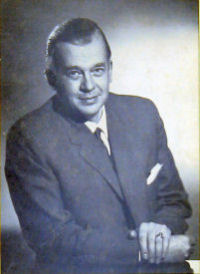
More by E. F. Schumacher
See allResonant Thoughts
"Later, however, I came to recognize the objective nature of these dreams or fantasies … Thus it was that I gradually came to acknowledge that such fantasies or dreams are neither meaningless nor purel…"
Explore Further
Related Quotes
"Countries with high voting rates also have high levels of political knowledge."
— Elizabeth May"We call heaven our home, as the best name we know to give it."
— James Anthony Froude"I've lost 38 pounds. I feel good now. Overall, probably got 35 percent less energy, but there's been platea…"
— Matthew McConaughey"Happy the man who hath never known what it is to taste of fame—to have it is a purgatory, to want it is a h…"
— Edward Bulwer-Lytton"We need each other / We believe in one another / And I know we're gonna uncover / What's sleeping in our souls"
— Noel Gallagher"Information is not knowledge. Knowledge is not wisdom. Wisdom is not truth. Truth is not beauty. Beauty is …"
— Frank Zappa


