Thinkers of the Ancient World

Socrates
469 BCE – 398 BCE
Literaturequotes
Socrates was an ancient Greek philosopher from Classical Athens, perhaps the first Western moral philosopher, and a major inspiration on his student Plato, who largely founded the tradition of Western philosophy. An enigmatic figure, Socrates authored no texts and is known mainly through the posthumous accounts of classical writers, particularly his students Plato and Xenophon. These accounts are written as dialogues, in which Socrates and his interlocutors examine a subject in the style of question and answer; they gave rise to the Socratic dialogue literary genre.
I am not an Athenian or a Greek, but a citizen of the world.

Confucius
550 BCE – 478 BCE
Philosophyquotes
Confucius (551 BC) was a Chinese philosopher and politician whose teachings profoundly influenced East Asian thought and culture.
A man living without conflicts, as if he never lives at all.
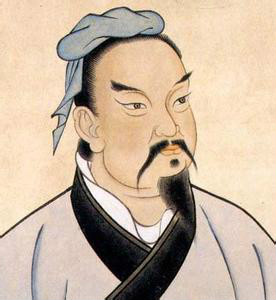
Sun Tzu
544 BCE – 496 BCE
Literaturequotes
Sun Tzu was a Chinese military general, strategist, philosopher, and writer who lived during the Eastern Zhou period. Sun Tzu is traditionally credited as the author of The Art of War, a Classical Chinese text on military strategy from the Warring States period, though the earliest parts of the work probably date to at least a century after him.
Translation in Simplified Chinese and English - Chinese Wiki

Thucydides
500 BCE – 420 BCE
Literaturequotes
Thucydides was an Athenian historian and general. His History of the Peloponnesian War recounts the fifth-century BC war between Sparta and Athens until the year 411 BC. Thucydides has been dubbed the father of "scientific history" by those who accept his claims to have applied strict standards of impartiality and evidence-gathering and analysis of cause and effect, without reference to intervention by the gods, as outlined in his introduction to his work.
Contempt for an assailant is best shown by bravery in action.

Herodotus
483 BCE – 424 BCE
Historyquotes
Herodotus was a Greek historian and geographer from the Greek city of Halicarnassus, under Persian control in the 5th century BC, and a later citizen of Thurii in modern Calabria, Italy. He wrote the Histories, a detailed account of the Greco-Persian Wars, among other subjects such as the rise of the Achaemenid dynasty of Cyrus. He has been described as "The Father of History", a title conferred on him by the ancient Roman orator Cicero.
From great wrongdoing there are great punishments from the gods.

Pindar
516 BCE – 436 BCE
Literaturequotes
Pindar was an Ancient Greek lyric poet from Thebes. Of the canonical nine lyric poets of ancient Greece, his work is the best preserved. Quintilian wrote, "Of the nine lyric poets, Pindar is by far the greatest, in virtue of his inspired magnificence, the beauty of his thoughts and figures, the rich exuberance of his language and matter, and his rolling flood of eloquence, characteristics which, as Horace rightly held, make him inimitable." His poems can also, however, seem difficult and even peculiar.

Pythagoras
570 BCE – 495 BCE
Mathematicsquotes
Pythagoras of Samos was an ancient Greek philosopher and mathematician who founded the Pythagorean school; he is best known for the Pythagorean theorem and for influential teachings that combined mathematics, philosophy, and religious practice.
Man know thyself; then thou shalt know the Universe and God.

Laozi
579 BCE – 500 BCE
Literaturequotes
Laozi, formerly latinized as Laocius, was a legendary Chinese philosopher considered to be the author of the Tao Te Ching, one of the foundational texts of Taoism. Modern scholarship generally regards his biographical details as later inventions and his opus a collaboration of various writers, with the name Laozi, literally meaning 'Old Master', likely intended to portray an archaic anonymity that could converse with Confucianism. Traditional accounts addend him as Li Er, born in the 6th-century BC state of Chu during China's Spring and Autumn period.
Words from September 18
"I am not an Athenian or a Greek, but a citizen of the world."
Socrates
469 BCE
"Education is the kindling of a flame, not the filling of a vessel."
Socrates
469 BCE
"A man living without conflicts, as if he never lives at all."
Confucius
550 BCE
"The Chinese Classics: Confucian Analects on Project Gutenberg"
Confucius
550 BCE
"Translation in Simplified Chinese and English - Chinese Wiki"
Sun Tzu
544 BCE
"Appear weak when you are strong, and strong when you are weak."
Sun Tzu
544 BCE