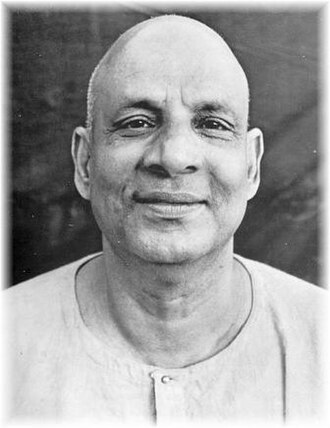
Swami Sivananda
Swami Sivananda Saraswati, also called Swami Sivananda, was a yoga guru, a Hindu spiritual teacher, and a proponent of Vedanta. Sivananda was born in Pattamadai, in the Tirunelveli district of modern Tamil Nadu, and was named Kuppuswami. He studied medicine and served in British Malaya as a physician for several years before taking up monasticism.
Trending & Selected Quotes
Trending topics shown first"Fish, eggs, meat, salt, chillies, and asafoetida are Rajasic food-stuffs; they excite passion and make the mind restless, unsteady, and uncontrollable."
"The diseases we suffer from the births we get here on earth are all products of actions done by us in previous times. Every action has its reaction and no action goes unrewarded in a suitable manner. …"
"This world is a strange world. We have to learn many lessons. One of the disciples of the Lord Jesus betrayed the Lord. Many obstacles will come to the growing aspirant at every step. We will have to …"
"Fear is illusory; it cannot live. Courage is eternal, it will not die. Perils, calamities, dangers are the certain lot of every man who is a denizen of this world. Therefore, O Man! Fortify your mind …"
"Until and unless Self-realisation is attained, Knowledge-Absolute is gained, there is ever the ebb and flow, the constant see-saw between the animal and the man in every human being. The beast or the …"
"Do not leave Japa and Sadhana even for a day. Adjust and adapt. Bear insult and injury. Learn to forget trifles. Tactfully move with people. Train everyone in Bhajan and Kirtan. Create spiritual vibra…"
Works & Publications
No works or publications documented yet.
Timeline
1887
Born
Birth1963
Died
Death
Influenced By
Thinkers whose ideas shaped Swami's philosophy
No known influences documented.
Influenced
Thinkers whose work was shaped by Swami's ideas
No influenced thinkers documented yet.
Source Attribution
Information about Swami Sivananda is sourced from curated knowledge bases and cross-referenced for accuracy. Influence relationships are scored by thematic overlap and historical plausibility.


