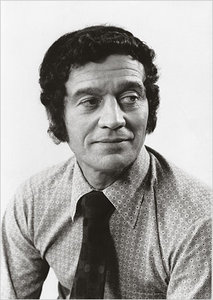
Anatole Broyard
Anatole Broyard (1920-1990) was an American writer, literary critic, and editor whose literary output spanned several decades. His oeuvre encompassed short stories, essays, and reviews. He was a prolific contributor to several literary magazines and publications, most notably The New York Times, where he served as a regular book reviewer for nearly fifteen years and later as an editor.
Career Journey
Background
- Born in
- New Orleans
- Educated at
- Boys High SchoolThe New School for Social Research
- Awards
- 🏆 Guggenheim Fellowship
Trending & Selected Quotes
Trending topics shown first"An aphorism is a generalization of sorts, and our present-day writers seem more at home with the particular."
"The contents of someone's bookcase are part of his history, like an ancestral portrait."
Works & Publications
No works or publications documented yet.
Timeline
1920
Born
Birth1990
Died
Death
Influenced By
Thinkers whose ideas shaped Anatole's philosophy
No known influences documented.
Influenced
Thinkers whose work was shaped by Anatole's ideas
No influenced thinkers documented yet.
Source Attribution
Information about Anatole Broyard is sourced from curated knowledge bases and cross-referenced for accuracy. Influence relationships are scored by thematic overlap and historical plausibility.
Related Thinkers
See all →


Explore Further
Related Quotes
"A man can never have too much Time to himself, nor too little to do. Had I a little son, I would christen h…"
— Charles Lamb"My familiar spirit is like an old wild turkey that forsakes a feeding ground as soon as it sees tracks of p…"
— Willa Cather"The boys with their feet on the desks know that the easiest murder case in the world to break is the one so…"
— Raymond Chandler"It is curious that physical courage should be so common in the world, and moral courage so rare."
— Mark Twain"Lightly, caressingly, Marie Antoinette picked up the crown as a gift. She was still too young to know that …"
— Stefan Zweig"There is little in common between the organised parading of madness in the eighteenth century and the freed…"
— Michel Foucault





