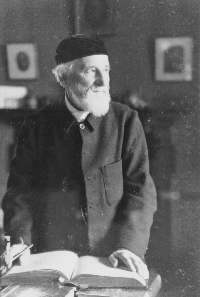
Thomas J. J. Altizer
Thomas Jonathan Jackson Altizer was an American university professor, religious scholar, and theologian, noted for his incorporation of Death of God theology and Hegelian dialectical philosophy into his body of work. He regarded his philosophical theology as also being grounded in the works of William Blake and considered his theology to have come into its own with his extended study of Blake's radical visionary thinking: The New Apocalypse: The Radical Christian Vision of William Blake (1967); indeed he regarded himself as the first and only fully Blakean theologian.
Background
- Born in
- Cambridge
- Educated at
- University of ChicagoSt. John's College
Trending & Selected Quotes
Trending topics shown first"What is most needed today is a fundamental theological thinking, one centered upon the Godhead itself, and centered upon that which is most challenging or most offensive in the Godhead, one which has …"
Works & Publications
No works or publications documented yet.
Timeline
1927
Born
Birth2018
Died
Death
Influenced By
Thinkers whose ideas shaped Thomas's philosophy
No known influences documented.
Influenced
Thinkers whose work was shaped by Thomas's ideas
No influenced thinkers documented yet.
Source Attribution
Information about Thomas J. J. Altizer is sourced from curated knowledge bases and cross-referenced for accuracy. Influence relationships are scored by thematic overlap and historical plausibility.
Related Thinkers
See all →


Explore Further
Related Quotes
"Narrated Abu Huraira: Allah's Apostle said, "Once Solomon, son of David said, ' Tonight I will have sexual …"
— Prophet Muhammad ﷺ"The whole world will smile at you when your heart is peaceful and your mind is clean. When you can smile at…"
— Jun Hong Lu"Do not excuse yourselves, beloved sirs, and judges, that you are the servants of the emperor; this will not…"
— Menno Simons"No man has need of religion who is self-righteous, who is all he wants to be and all he ought to be."
— Fulton J. Sheen"A social world a comprehensive and given reality confronting the individual in a manner analogous to the re…"
— Peter L. Berger"Solitude shows us what should be; society shows us what we are."
— Richard Cecil (clergyman)