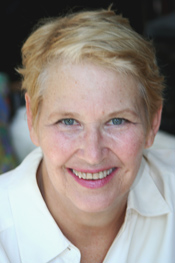
Annie Dillard
Annie Dillard is an American author, best known for her narrative prose in both fiction and nonfiction. She has published works of poetry, essays, prose, and literary criticism, as well as two novels and one memoir. Her 1974 book Pilgrim at Tinker Creek won the 1975 Pulitzer Prize for General Nonfiction.
Background
- Born in
- Pittsburgh
- Educated at
- Hollins University
- Awards
- 🏆 Bollingen Prize🏆 Pulitzer Prize for General Nonfiction🏆 Guggenheim Fellowship🏆 National Humanities Medal🏆 Connecticut Women's Hall of Fame
Trending & Selected Quotes
Trending topics shown first"On the whole, I do not find Christians, outside the catacombs, sufficiently sensible of the conditions. Does anyone have the foggiest idea what sort of power we so blithely invoke? Or, as I suspect, d…"
"How we spend our days is, of course, how we spend our lives. What we do with this hour, and that one, is what we are doing. A schedule defends from chaos and whim. It is a net for catching days. It is…"
"I think of the fox that Park Service Ranger Gene Parker told me about. The fox sprawled naked and pink-skinned in a mountain field, unable to rise, dying of mange. I think of the swimming bluegill I s…"
"There are no events but thoughts and the heart's hard turning, the heart's slow learning where to love and whom. The rest is merely gossip, and tales for other times."
"Let me repeat that these parasitic insects comprise ten percent of all known animal species. How can this be understood? Certainly we give our infants the wrong idea about their fellow creatures in th…"
Works & Publications
No works or publications documented yet.
Timeline
1945
Born
Birth2026
Died
Death
Family & Connections
- spouse:
- Robert D. Richardson
Influenced By
Thinkers whose ideas shaped Annie's philosophy



Influenced
Thinkers whose work was shaped by Annie's ideas
No influenced thinkers documented yet.
Source Attribution
Information about Annie Dillard is sourced from curated knowledge bases and cross-referenced for accuracy. Influence relationships are scored by thematic overlap and historical plausibility.


