
Mo Yan
Guan Moye, better known by the pen name Mo Yan, is a Chinese novelist and short story writer. In 2012, Mo was awarded the Nobel Prize in Literature for his work as a writer "who with hallucinatory realism merges folk tales, history and the contemporary". Donald Morrison of TIME referred to him as "one of the most famous, oft-banned and widely pirated of all Chinese writers", and Jim Leach called him the Chinese answer to Franz Kafka or Joseph Heller.
Career Journey
Background
- Born in
- Gaomi
- Educated at
- Beijing Normal UniversityCollege of Military Culture at the PLA National Defense University
- Awards
- 🏆 Nobel Prize in Literature🏆 Fukuoka Asian Culture Prize🏆 International Nonino Prize🏆 honorary doctor of the Chinese University of Hong Kong🏆 honorary doctor of the Aix-Marseille University
Trending & Selected Quotes
Trending topics shown firstWorks & Publications
No works or publications documented yet.
Timeline
1955
Born
Birth
Influenced By
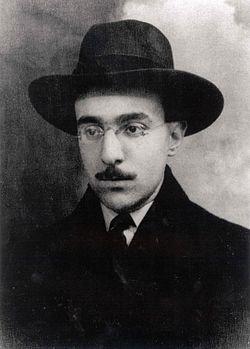
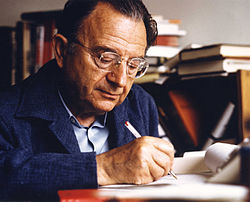
Thinkers whose ideas shaped Mo's philosophy





Influenced
Thinkers whose work was shaped by Mo's ideas
No influenced thinkers documented yet.
Source Attribution
Information about Mo Yan is sourced from curated knowledge bases and cross-referenced for accuracy. Influence relationships are scored by thematic overlap and historical plausibility.
Related Thinkers
See all →


Explore Further
Related Quotes
"After the one extravagant gesture of creation in the first place, the universe has continued to deal exclus…"
— Annie Dillard"America is woven of many strands; I would recognize them and let it so remain. It's "winner take nothing" t…"
— Ralph Ellison"It's only when a man tames his own demons that he becomes the king of himself if not of the world."
— Joseph Campbell"There is a grim and ghastly humor -- the humor that is born of a pathetic philosophy -- which now and then …"
— Edgar Wilson Nye"Wolf - tis what he is. He's not blackhearted like some men. 'Tis no heart he has at all. Wolf. just Wolf, t…"
— Jack London"A man does not talk to himself quite truly — not even to himself: the happiness or misery that he secretly …"
— E. M. Forster





