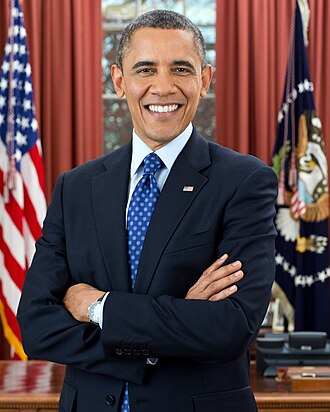
Lyndon LaRouche
Lyndon Hermyle LaRouche Jr. was an American political activist who founded the LaRouche movement and its main organization, the National Caucus of Labor Committees (NCLC). He was a prominent conspiracy theorist and perennial presidential candidate.
Background
- Born in
- Rochester
- Educated at
- Northeastern UniversityEnglish High School
Trending & Selected Quotes
Trending topics shown first"The objective of my life is to contribute to bringing men and women out of the wretched condition of sensuous donkeys and incompletely human 'silver souls' to contribute to making of our species a rac…"
"The ruling British elite are like animals--not only in their morality, but in their outlook on knowledge. They are clever animals, who are masters of the wicked nature of their own species, and recogn…"
"The record shows, that for nearly thirty years, elements of the U.S. Department of Justice have been engaged in world-wide political targeting of me and my associates. This includes early 1970s operat…"
"nest of Soviet fellow travelers clacking busybodies in a Soviet jellyfish front, sitting here in Leesburg oozing out their funny little propaganda and making nuisances of themselves."
"During late Autumn 1956, in connection with a marketing study, I forecast the imminence of a major U.S. economic recession, triggered by the over-stretching of a post-1954 credit-bubble centered in fi…"
"According to a variety of very authoritative sources, Henry A. Kissinger is not a Jew, but a faggot. I will not tolerate any denial of civil rights to a person who happens to be homosexual. Ordinarily…"
Works & Publications
No works or publications documented yet.
Timeline
1922
Born
Birth2019
Died
Death
Influenced By
Thinkers whose ideas shaped Lyndon's philosophy
No known influences documented.
Influenced
Thinkers whose work was shaped by Lyndon's ideas
No influenced thinkers documented yet.
Source Attribution
Information about Lyndon LaRouche is sourced from curated knowledge bases and cross-referenced for accuracy. Influence relationships are scored by thematic overlap and historical plausibility.