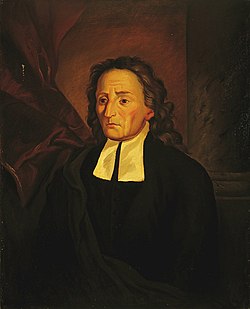
Giambattista Vico
Giambattista Vico was an Italian philosopher, rhetorician, historian, and jurist during the Italian Enlightenment. He criticized the expansion and development of modern rationalism, finding Cartesian analysis and other types of reductionism impractical to human life, and he was an apologist for classical antiquity and the Renaissance humanities, in addition to being the first expositor of the fundamentals of social science and of semiotics. He is recognised as one of the first Counter-Enlightenment figures in history.
Background
- Born in
- Naples
- Educated at
- University of Naples Federico II
Trending & Selected Quotes
Trending topics shown first"Essays on Vico's creative influence on James Joyce's Finnegans Wake"
"Uniform ideas originating among entire peoples unknown to each other must have a common ground of truth."
"Vico's creative influence on Richard James Allen's The Way Out At Last Cycle"
Works & Publications
No works or publications documented yet.
Timeline
1668
Born
Birth1744
Died
Death
Influenced By
Thinkers whose ideas shaped Giambattista's philosophy
No known influences documented.
Influenced
Thinkers whose work was shaped by Giambattista's ideas
No influenced thinkers documented yet.
Source Attribution
Information about Giambattista Vico is sourced from curated knowledge bases and cross-referenced for accuracy. Influence relationships are scored by thematic overlap and historical plausibility.
Related Thinkers
See all →

Explore Further
Related Quotes
"There is a written and an unwritten law. The one by which we regulate our constitutions in our cities is th…"
— Diogenes Laërtius"Why not be a top-notcher? A top-notcher is simply an individual who works for the institution of which he i…"
— Elbert Hubbard"Be realistic: Plan for a miracle."
— Rajneesh"There are some animals like elephants that have larger brains than us and they don't seem to be smarter. ..…"
— Joscha Bach"The fundamental criterion for judging any procedure is the justice of its likely results."
— John Rawls"The next thing is by gentle degrees to accustom children to those things they are too much afraid of. But h…"
— John Locke




