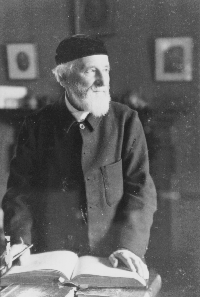
"To be a dandy and get the name of being one ought, I maintain, to be considered by persons so inclined just as disgraceful as to keep company with harlots or to seduce other men’s wives. For what difference should it make, at least to a man of sense, whether he is clothed in a costly robe or wears a cheap workman’s cloak, so long as what he has on gives adequate protection against the cold of winter and the heat of summer? And in all other matters likewise, one ought not to be furnished out more elaborately than need requires, nor to be more solicitous for the body than is good for the soul. For it is no less a reproach to a man, who is truly worthy of that appellation, to be a dandy and a pamperer of the body than to be ignoble in his attitude towards any other vice. For to take all manner of pains that his body may be as beautiful as possible is not the mark of a man who either knows himself or understands that wise precept: “That which is seen is not the man, but there is need of a certain higher wisdom which will enable each of us, whoever he is, to recognize himself."

React to this quote
More by Basil of Caesarea
See allResonant Thoughts
"And at times I'm tempted to think that our way and the Kirk's way is not God's way, for we're apt to treat the natural man as altogether corrupt, and put him under over-strict pains and penalties, whe…"
"The Budget...is introduced not merely for the purpose of raising barren taxes, but taxes that are fertile, taxes that will bring forth fruit—the security of the country which is paramount in the minds…"
Explore Further
Related Quotes
"Driving is a spectacular form of amnesia. Everything is to be discovered, everything to be obliterated. Adm…"
— Jean Baudrillard"Good people are good because they've come to wisdom through failure. We get very little wisdom from success…"
— William Saroyan"Through failures one becomes intelligent; but the one who has trained himself in this subject so that he ca…"
— Immanuel Kant"Trained chauvinists. When they get together, they talk about pussy. I heard them talk, and there was no gen…"
— Margot Kidder"Non-action is unceasing activity. The sage is characterized by eternal and intense activity. His stillness …"
— Ramana Maharshi"You know, shortly after I graduated in '68, Kent State, 17 kids shot dead. And so, the younger generation n…"
— Joe Biden