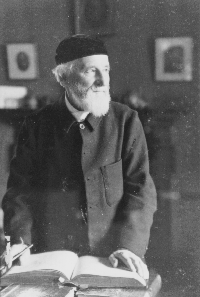
"The value of Dhamma isn’t to be found in books. Those are just the external appearances of Dhamma, they’re not the realization of Dhamma as a personal experience. If you realize the Dhamma you realize your own mind, you see the truth there. When the truth becomes apparent it cuts off the stream of delusion."
React to this quote
More by Ajahn Chah
See allResonant Thoughts
"This country of ours has been the birthplace and the home of some of the greatest movements that have yet arisen for human freedom and human progress, and the strength of our race is not yet exhausted…"
Explore Further
Related Quotes
"You can't bomb for a humane reason. What we should do is just Mother Teresa them to death with love. It's t…"
— Ken Kesey"Our Lady of the Fishnet Stockings"
— Christopher Moore (author)"The sexual revolution has begun to devour its children. The statistics on abortion, divorce, collapsing bir…"
— Pat Buchanan"The problem, if anything, was precisely the opposite. I had too much to write: too many fine and miserable …"
— Michael Chabon"Another example — maybe a better one, in a way — was when it was confirmed that Michael Jackson was going t…"
— William Gibson"Reform Jews are the children of Conservative Jews, or as they are sometimes known, Christians with curlier …"
— Jon Stewart