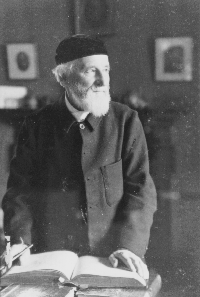
"Dialectics is the way of seeking for truth by talking with others from different points of view, through "Yes" and "No," until a "Yes" has been reached which is hardened in the fire of many "No's" and which unites the elements of truth promoted in the discussion. It is most unfortunate that in recent years the name "dialectical theology" has been applied to a theology that is strongly opposed to any kind of dialectics and mediation and that constantly repeats the "Yes" to its own and the "No" to any other position. This has made it difficult to use the term "dialectical" to denote theological movements of a really dialectical, that is a mediating, character; and it has resulted in the cheap and clumsy way of dividing all theologians into naturalists and supernaturalists, or into liberals and orthodox. The Protestant Era by Paul Tillich 1948 Introduction"

React to this quote
More by Paul Tillich
See allResonant Thoughts
"The Roman god, Lucifer, was the bearer of light, the spirit of the air, the personification of enlightenment. It has been said "the truth will make men free". The truth alone has never set anyone free…"
Explore Further
Related Quotes
"Nothing inspires honesty like fear or trouble."
— Steve Maraboli"True or not, this man who is married to the Star for All Seasons will remain an all-weather friend to me, a…"
— Francis Escudero"There are many democracies in our Arab and Islamic countries, but unfortunately, they are all false democra…"
— Yusuf Qaradawi"the supreme state is entirely one and indivisible, a single solid block of reality. The only way of knowing…"
— Nisargadatta Maharaj"In the effort to regain a space of true leisure, to bring about a fundamentally correct attitude and "exerc…"
— Josef Pieper"Secular, democratic India must know the truth and make peace with it."
— A. Surya Prakash