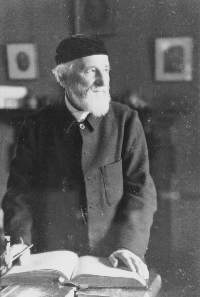
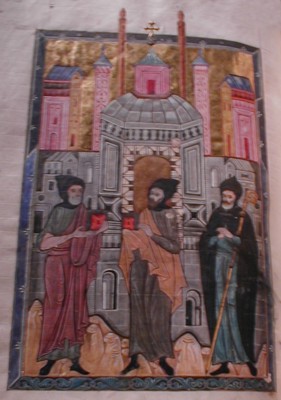
"From the saints I must take the substance, not the accidents of their virtues. I am not St. Aloysius, nor must I seek holiness in his particular way, but according to the requirements of my own nature, my own character and the different conditions of my life. I must not be the dry, bloodless reproduction of a model, however perfect. God desires us to follow the examples of the saints by absorbing the vital sap of their virtues and turning it into our own life-blood, adapting it to our own individual capacities and particular circumstances. If St. Aloysius had been as I am, he would have become holy in a different way."

React to this quote
More by Pope John XXIII
See allResonant Thoughts
"A rich man had a garden and two gardeners. One of these gardeners was very lazy and did not work; but when the owner came to the garden, the lazy man would get up and fold his arms and say, "How beaut…"
Explore Further
Related Quotes
"Action indeed is the sole medium of expression for ethics."
— Jane Addams"We have no hesitation in declaring that we are a military nation- in the cause of Kodo and the highest mora…"
— Sadao Araki"The German Army is tired. The vain effort to defeat Russia's armies has used up its equipment and reduced i…"
— Walther von Brauchitsch"The original of morals lies with the thought that ‘the community is more valuable than the individual’"
— John Carroll"this complex form of realism.. ..totally destroys the integrity of the subject-matter.. .The abstract color…"
— Gino Severini"Hypertext makes a virtue out of lack of organization, allowing ideas and thoughts to be juxtaposed at will.…"
— Donald Norman