#power
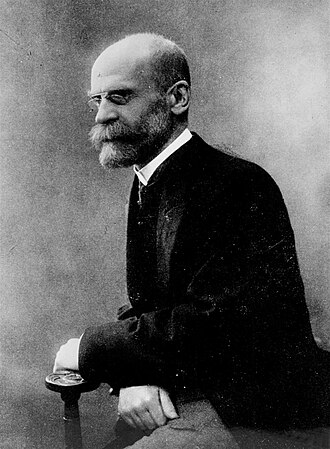
"Nowadays, the phenomenon has developed so generally it is obvious to all. We need have no further illusions about the tendencies of modern industry; it advances steadily towards powerful machines, towards great concentrations of forces and capital, and consequently to the extreme division of labor. Occupations are infinitely separated and specialized, not only inside the factories, but each product is itself a specialty dependent upon others. Adam Smith and John Stuart Mill still hoped that agriculture, at least, would be an exception to the rule, and they saw it as the last resort of small-scale industry. Although one must be careful not to generalize unduly in such matters, nevertheless it is hard to deny today that the principal branches of the agricultural industry are steadily being drawn into the general movement. Finally, business itself is ingeniously following and reflecting in all its shadings the infinite diversity of industrial enterprises; and, while this evolution is realizing itself with unpremeditated spontaneity, the economists, examining its causes and appreciating its results, far from condemning or opposing it, uphold it as necessary. They see in it the supreme law of human societies and the condition of their progress."
React to this quote
More by Émile_Durkheim
See allResonant Thoughts
Explore Further
Related Quotes
"In September the government announced the national security strategy. That is not completely without preced…"
— Noam Chomsky"Be a craftsman in speech that thou mayest be strong, for the strength of one is the tongue, and speech is m…"
— Ptahhotep"No one doubts—certainly not I—that the mind exercises a powerful influence over the body. From the beginnin…"
— Mark Twain"No matter what we choose, our unwavering stance is to enhance the safety of nuclear power generation in the…"
— Sean Chen"not the right way to control immigration"
— David Cameron"The mob was fed lies. They were provoked by the President and other powerful people."
— Mitch McConnell





