#change
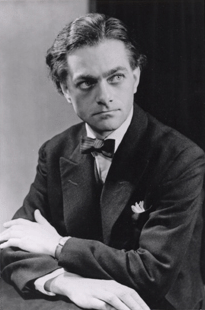
"It seems to me that the notion of machine that was current in the course of the Industrial Revolution – and which we might have inherited – is a notion, essentially, of a machine without goal, it had no goal ‘of’, it had a goal ‘for’. And this gradually developed into the notion of machines with goals ‘of’, like thermostats, which I might begin to object to because they might compete with me. Now we’ve got the notion of a machine with an underspecified goal, the system that evolves. This is a new notion, nothing like the notion of machines that was current in the Industrial Revolution, absolutely nothing like it. It is, if you like, a much more biological notion, maybe I’m wrong to call such a thing a machine; I gave that label to it because I like to realise things as artifacts, but you might not call the system a machine, you might call it something else."
React to this quote
More by Gordon Pask
See allResonant Thoughts
Explore Further
Related Quotes
"We keep a change in place by helping to create a new, supportive, and sufficiently strong organizational cu…"
— John Kotter"People are terrified of changing their minds. Changing your mind is a door you don’t want to open because y…"
— Peter Hitchens"The change favors the prepared mind"
— Ko Wen-je"We exchanged a meaning glance. Or, rather, two meaning glances, I giving him one and he giving me the other."
— P. G. Wodehouse"Profit can only arise upon alienation, i.e. in the act of exchange, when the seller sells more dearly than …"
— Eric Roll"It is hard to grow up in a society in which one’s important problems are treated as nonexistent. It is impo…"
— Paul Goodman
Related Thinkers


Related Topics
Deep Dives
- Larry Wall on change
- Linus Torvalds on change
- Vitruvius on change
- N. R. Narayana Murthy on knowledge
- N. R. Narayana Murthy on leadership
- N. R. Narayana Murthy on books
- N. R. Narayana Murthy on creativity
- N. R. Narayana Murthy on education
- N. R. Narayana Murthy on friendship
- N. R. Narayana Murthy on hope
- knowledge & Beauty
- knowledge & Change