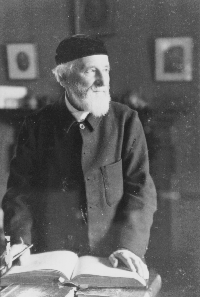
"Auliya’s thought on Jihad against non-Muslims can be gleaned from his statement that Surah Fatihah, first chapter of the Quran, did not contain two of the ten cardinal articles of Islam, which were ‘‘warring with the unbelievers and observing the divine statutes...’’ He did not only believe in warring with the unbelievers or Jihad, he came to India with his followers to engage in it. He participated in a holy war commanded by Nasiruddin Qibacha in Multan. When Qibacha’s army was in distress facing defeat, Auliya rushed to him and gave him a magical arrow instructing: ‘‘Shoot this arrow at the direction of the infidel army.’ ...Qibacha did as he was told, and when daybreak came not one of the infidels was to be seen; they all had fled!’ 254 When Qazi Mughisuddin inquired about the prospect of victory in the Jihad launched in South India under the command of Malik Kafur, the Auliya uttered in effusive confidence: ‘What is this victory? I am waiting for further victories.’ 255"

React to this quote
More by Nizamuddin Auliya
See allResonant Thoughts
"There is usually no ressentiment just where a superficial view would look for it first: in the criminal. The criminal is essentially an active type. Instead of repressing hatred, revenge, envy, and gr…"
"I do not have the professional knowledge to write a scholarly article about Spinoza. But what I think about this man I can express in a few words. Spinoza was the first to apply with strict consistenc…"
Explore Further
Related Quotes
"When I get sick of what men do, I have only to walk a few steps in another direction to see what spiders do…"
— E. B. White"There is small risk a general will be regarded with contempt by those he leads, if, whatever he may have to…"
— Xenophon"Since Jesse Jackson ran for president, and perhaps up until the movement, the Democratic Party has dominate…"
— Crispin Sartwell"So what am I doing? Well I hope that by providing a personal insight into my own journey into greater under…"
— David Morrison"All of the great leaders have had one characteristic in common: it was the willingness to confront unequivo…"
— John Kenneth Galbraith"From Aristophanes to Aristotle, the attack on the demagogues always falls back on the one central question:…"
— Moses I. Finley