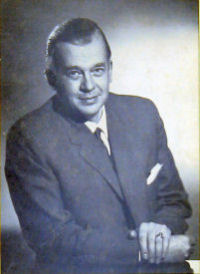
"The ownership and the consumption of goods is a means to an end, and Buddhist economics is the systematic study of how to attain given ends with the minimum means. Modern economics, on the other hand, considers consumption to be the sole end and purpose of all economic activity, taking the factors of production—labour and capital—as the means. The former, in short, tries to maximise human satisfactions by the optimal pattern of consumption, while the latter tries to maximise consumption by the optimal pattern of productive effort."
React to this quote
More by E. F. Schumacher
See allResonant Thoughts
"Whatever is in motion must be put in motion by another. If that by which it is put in motion be itself put in motion, then this also must needs be put in motion by another, and that by another again. …"
Explore Further
Related Quotes
"Not by way of reason, but only by way of love and suffering, do we come to the living God, the human God. R…"
— Miguel de Unamuno"I was too green to know that all cynicism masks a failure to cope – an impotence, in short and to despise a…"
— John Fowles"I am, then, first of all, countryfied, an exile, evidently unlearned, one who is not able to see into the f…"
— Saint Patrick"The ignorance of even the best-informed investor about the more remote future is much greater than his know…"
— John Maynard Keynes"We have to agree that it is a type of nationalism, though as such it really is only the most conspicuous te…"
— Koenraad Elst"What I want to know is this: Are the stars gold paper or is the gold paper stars?"
— P. L. Travers
Related Thinkers


Related Topics
Deep Dives
- David Cay Johnston on knowledge
- Norman Angell on knowledge
- Bernard Lietaer on knowledge
- Robin Hahnel on knowledge
- George Katona on knowledge
- David Cay Johnston on politics
- David Cay Johnston on time
- David Cay Johnston on justice
- David Cay Johnston on life
- David Cay Johnston on art
- justice & Beauty
- justice & Change