"Certainly He says this for me, for thee, for this other man, since He bears His body, the Church. Unless you imagine, brethren, that when He said: “My Father, if it be possible, let this cup pass away from Me” , it was the Lord that feared to die. . . . But Paul longed to die, that he might be with Christ. What? The Apostle desires to die, and Christ Himself should fear death? What can this mean, except that He bore our infirmity in Himself, and uttered these words for those who are in His body and still fear death? It is from these that the voice came; it was the voice of His members, not of the Head. When He said, “My soul is sorrowful unto death” , He manifested Himself in thee, and thee in Himself. And when He said, “My God, my God, why has Thou forsaken Me?” , the words He uttered on the cross were not His own, but ours."
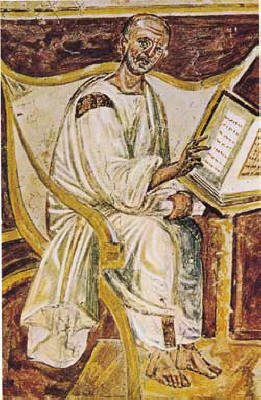
React to this quote
More by Augustine of Hippo
See allResonant Thoughts
"Overcapitalization in all its shapes is one of the prime evils; for it is one of the most fruitful methods by which unscrupulous men get improper profits, and when the holdings come into innocent hand…"
Explore Further
Related Quotes
"When the Apostle of God appeared, He did not announce unto the unbelievers that the Resurrection had come, …"
— Báb"To-day alone was real. Never was man brought into contact with reality save through the evanescent emotions…"
— James Branch Cabell"A Muslim asked: "Oh Apostle of God, who are your kin whom you have ordered us to obey?" He replied, "Ali , …"
— Prophet Muhammad ﷺ"Expect great things from God; attempt great things for God."
— William Carey (missionary)"Speak of the Gods as they are."
— Bias of Priene"I have only one certainty: there exists a parallel spiritual universe that impinges on the world in which w…"
— Paulo Coelho
Related Thinkers




Related Topics
Deep Dives
- Friedrich Nietzsche on religion
- Baruch Spinoza on religion
- Thomas Carlyle on religion
- Aristotle on religion
- Immanuel Kant on religion
- Ludwig Wittgenstein on religion
- Michel de Montaigne on religion
- Epictetus on religion
- Friedrich Nietzsche on life
- Friedrich Nietzsche on truth
- knowledge & Beauty
- knowledge & Change