#time

"Economics has always flourished and acquired energy from controversies generated by practical policy questions of the day. That was true in the times of Smith, and Ricardo, and Keynes, and it is true today. These periods of division and revolution and counterrevolution are generally followed by periods of synthesis and consolidation from which the science emerges stronger. i am optimistic that this will happen again, and that the best of the insights of the new clasicals will be absorbed in a mainstream, in which the essential insights of Keynesian economists also survive."
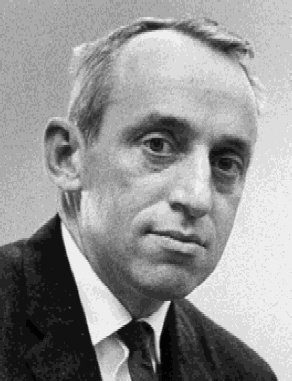
quotekg

React to this quote

More by James Tobin

See all

“According to , the principal way in which financial policies and events affect aggregate demand is by changing the valuations of physical assets relative to their replacement costs.”

“Keynesian economics at a minimum provides a license for welfare state measures and other government efforts towards redistribution of wealth. The license is the faith that macroeconomic stabilization and prosperity are compatible with a wide range of social policies, that modern capitalism and democracy are robust enough to prosper and progress while being humane and equitable. That faith conflicts with the visions of extreme Right and Left, which agree that extremes of wealth and poverty, of security and insecurity, are indispensable to the functioning of capitalism. Keynesian policies helped to confound those dismal prophecies in the past; I think they will do so again.”

“Keynesian economics was, in the context of those times, essentially conservative. The message was that capitalism was not doomed; its major failing, chronic large-scale unemployment, could be remedied fairly easily, by intelligent use of the fiscal and monetary instruments governments already had at their disposal. This message was not welcome news to Marxists committed to the view that the system was no longer structurally capable of prosperity and progress.”

“I had, to be sure, been drawn into economics when the General Theory was an exciting revelation for students hungry for explanation and remedy of the Great Depression. At the same time, I was uncomfortable with several aspects of Keynes’ theory, and I sought to improve what would now be called the microfoundations of his macroeconomic relations.”

“With the publication of J. M. Keynes’s General Theory in 1936 and the mathematical formalizations of his theory by J. R. Hicks and others, the language of macro-economic theory became systems of simultaneous equations. These are general equilibrium systems of interdependence in the sense that the relationships describe an entire national economy, not just a particular industry or sector. The systems are usually not completely closed; they depend on exogenous parameters including instruments controlled by policy-makers. Seeking definite relationships of economic outcomes to policies and other exogenous variables, qualitative and quantitative, these models sacrifice detail and generality, limiting the number of variables and equations by aggregations over agents, commodities, assets, and time.”

“Monetarism—both of the older Friedman version stressing adherence to money stock targets and of the newer rational expectations variety—has been badly discredited. The stage has been set for recovery in the popularity of Keynesian diagnoses and remedies. I do not mean to imply, of course, that there is some Keynesian truth, vintage 1936 or 1961, to which economists and policymakers will or should now return, ignoring the lessons of economic events and of developments in economics itself over these last turbulent fifteen years. I do mean that in the new intellectual synthesis which I hope and expect will emerge to replace the divisive controversies and chaotic debates on macroeconomic policies, Keynesian ideas will have a prominent place.”