"Throughout human history, societies have grappled with fundamental questions of how to organize themselves, the proper relationship between the individual and the state, the best means to resolve inevitable conflicts between states. And it was here in Europe, through centuries of struggle -- through war and Enlightenment, repression and revolution -- that a particular set of ideals began to emerge: The belief that through conscience and free will, each of us has the right to live as we choose. The belief that power is derived from the consent of the governed, and that laws and institutions should be established to protect that understanding. And those ideas eventually inspired a band of colonialists across an ocean, and they wrote them into the founding documents that still guide America today, including the simple truth that all men -- and women -- are created equal. But those ideals have also been tested -- here in Europe and around the world. Those ideals have often been threatened by an older, more traditional view of power. This alternative vision argues that ordinary men and women are too small-minded to govern their own affairs, that order and progress can only come when individuals surrender their rights to an all-powerful sovereign. Often, this alternative vision roots itself in the notion that by virtue of race or faith or ethnicity, some are inherently superior to others, and that individual identity must be defined by “us” versus “them,” or that national greatness must flow not by what a people stand for, but by what they are against. In many ways, the history of Europe in the 20th century represented the ongoing clash of these two sets of ideas, both within nations and among nations. The advance of industry and technology outpaced our ability to resolve our differences peacefully, and even among the most civilized of societies, on the surface we saw a descent into barbarism."
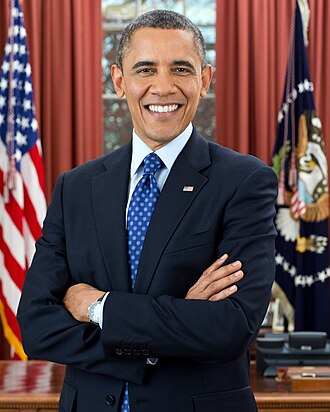
React to this quote
More by Barack Obama
See allResonant Thoughts
"Mexicans: let us now pledge all our efforts to obtain and consolidate the benefits of peace. Under its auspices, the protection of the laws and of the authorities will be sufficient for all the inhabi…"
Explore Further
Related Quotes
"I wrote a script and gave it to a guy that reads scripts. And he read it and said he really likes it, but h…"
— Mitch Hedberg"If I am fortunate enough to be confirmed, we will turn the page on hate and close the door on discriminatio…"
— Kristen Clarke"The unhappy legacies of authoritarianism can be removed only if the concept of absolute power as the basis …"
— Aung San Suu Kyi"The law of 1790 providing that no one could become a citizen of the United States except free Whites was th…"
— Madison Grant"This striving becomes understood completely as an end in itself—to such an extent that it appears as fully …"
— Max Weber"The body is an instrument which only gives off music when it is used as a body. Always an orchestra, and ju…"
— Anaïs Nin




