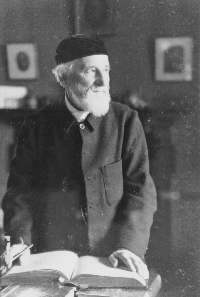
#ethics

"Pre-Constantinian Christians had been pacifists, rejecting the violence of army and empire not only because they had no share of power, but because they considered it morally wrong; the post-Constantinian Christians considered imperial violence to be not only morally tolerable but a positive good and a Christian duty."

quotekg

React to this quote

More by John Howard Yoder

See all

“What would happen if everyone did it? If everyone gave their wealth away what would we do for capital? If everyone loved their enemies who would ward off the Communists? This argument could be met on other levels, but here our only point is to observe that such reasoning would have been preposterous in the early church and remains ludicrous whenever committed Christians accept realistically their minority status. Far more fitting than "What if everybody did it" would be its inverse, "What if nobody else acted like a Christian, but we did?”

“If truth were left to a market philosophy, there would be no point in continuing to make an argument for which there are no takers, or to ask a question for which there are no answers. The minority community has other grounds to sustain a wholesome discomfort and thereby keeps the door open for solutions not yet found.”

“The particular temptation of contemporary Christian communities is to tailor our beliefs so that they are socially respectable. Whether our beliefs are respectable or not varies from place to place and from time to time. Right now it happens that in Western society there is a growing awareness of the relevance of Christian commitment. But if this were not the case, it should be no less surely and no less arrogantly our commitment. We must not let our decision about Christian obedience be measured by what our neighbors would consider "socially responsible.”

“After Constantine ... the ruler, not the average person or the weak person, is the model for ethical deliberations. A moral statement on the rightness of truth-telling or the wrongness of killing is tested first by whether a ruler can meet such standards.”

“It is often mistakenly held that the key concept of Jesus' ethic is the "Golden Rule": "do unto others as you would have them do unto you." This is stated by Jesus, however, not as the sum of his own teaching but as the center of the law . But Jesus' own "fulfillment" of this thrust of the law, which thereby becomes through his own work a "new commandment" is different, "Do as I have done to you" or "do as the Father did in sending his Son.”

“A dichotomy between the religious and the social must be imported into the ; it cannot be found there. The "cross" of Jesus was a political punishment; and when Christians are made to suffer by government it is usually because because of the practical import of their faith, and the doubt they cast upon the rulers' claim to be "Benefactor.”