"The doctor asserted, 'Sure religion is a fine influence—got to have it to keep the lower classes in order—fact, it's the only thing that appeals to a lot of these fellows and makes 'em respect the rights of property. And I guess this theology is O.K.; lot of wise old coots figured it out, and they knew more about it than we do.' He believed in the Christian religion, and never thought about it; he believed in the church, and seldom went near it; he was shocked by Carol's lack of faith, and wasn't quite sure what was the nature of the faith that she lacked. Carol herself was an uneasy and dodging agnostic. When she ventured to Sunday School and heard the teachers droning that the genealogy of Shamsherai was a valuable ethical problem for children to think about; when she experimented with the Wednesday prayer-meeting and listened to store-keeping elders giving unvarying weekly testimony in primitive erotic symbols and such gory Chaldean phrases as 'washed in the blood of the lamb' and 'a vengeful God...' then Carol was dismayed to find the Christian religion, in America, in the twentieth century, as abnormal as Zoroastrianism—without the splendor. But when she went to church suppers a felt the friendliness, saw the gaiety with which the sisters served cold ham and scalloped potatoes; when Mrs. Champ Perry cried to her, on an afternoon call, 'My dear, if you just knew how happy it makes you to come into abiding grace,' then Carol found the humanness behind the sanguinary and alien theology."
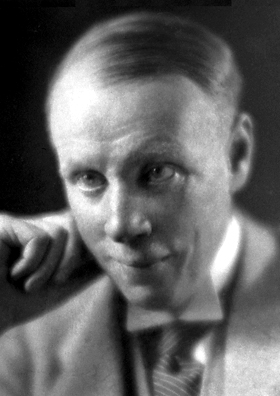
More by Sinclair Lewis
See allResonant Thoughts
"“the utter subjection and poverty of the common people-poverty so great and miserable that the life of the people can be depicted or accurately described only as the home of stark want and the dwellin…"
Explore Further
Related Quotes
"I will not take final Nirvana until I have nuns and female disciples who are accomplished… until I have lay…"
— Gautama Buddha"This shameful status of higher education is due in a large measure to low standards of institutions with a …"
— Carter G. Woodson"“All my teachings are only introductions,"
— Nachman of Breslov"In Washington last week, officials from the National Rifle Association met with a group of 200 high school …"
— Tina Fey"Like most people, I can vividly recall exactly where I was when I heard the news. It was chemistry class, s…"
— Salvatore Giunta"In 2011, together with a team of 15 scientists, I relocated to Houston, Texas, to launch a new school devot…"
— Peter Hotez





