#religion
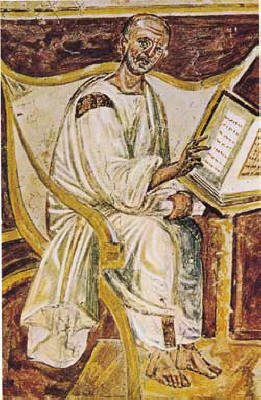
"Wherefore, though good and bad men suffer alike, we must not suppose that there is no difference between the men themselves, because there is no difference in what they both suffer. For even in the likeness of the sufferings, there remains an unlikeness in the sufferers; and though exposed to the same anguish, virtue and vice are not the same thing. For as the same fire causes gold to glow brightly, and chaff to smoke; and under the same flail the straw is beaten small, while the grain is cleansed; and as the lees are not mixed with the oil, though squeezed out of the vat by the same pressure, so the same violence of affliction proves, purges, clarifies the good, but damns, ruins, exterminates the wicked. And thus it is that in the same affliction the wicked detest God and blaspheme, while the good pray and praise. So material a difference does it make, not what ills are suffered, but what kind of man suffers them. For, stirred up with the same movement, mud exhales a horrible stench, and ointment emits a fragrant odor."
React to this quote
More by Augustine of Hippo
See allResonant Thoughts
"The Muslim religion is so unreformed since it was created that nowhere in the Muslim world has there been any real advance in science, or art or literature, or technology in the last 500 years...we've…"
— Norman Tebbit
Politics1931–2025
Explore Further
Related Quotes
"Music is my religion."
— Josh Homme"There is not one of you whose actions do not operate on the actions of others — operate, we mean, in the wa…"
— Henry Melvill"Bishop, this is a full tithe and a little bit more, because that’s the way we have been blessed."
— Henry D. Moyle"What moments divine, what rapture serene."
— Cole Porter"The more a religion is aware of its opposition in principle to economic rationalization as such, the more a…"
— Max Weber"I will see you in heaven."
— John Bodkin Adams
Related Thinkers




Related Topics
Deep Dives
- Friedrich Nietzsche on religion
- Baruch Spinoza on religion
- Thomas Carlyle on religion
- Aristotle on religion
- Immanuel Kant on religion
- Ludwig Wittgenstein on religion
- Michel de Montaigne on religion
- Epictetus on religion
- Friedrich Nietzsche on life
- Friedrich Nietzsche on truth
- knowledge & Beauty
- knowledge & Change