#justice
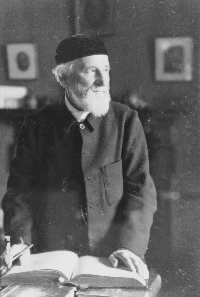
"I will be candid. I believe God is a just God, rewarding and punishing us exactly as we act well or ill. I believe that such reward and punishment follow necessarily from His will as revealed in natural law, as well as in the Bible. I believe that as the highest justice is the highest mercy, so He is a merciful God. That the guilty should suffer the measure of penalty which their guilt has incurred, is justice. What we call mercy is not the remission of this, but rather the remission of the extremity of the sentence attached to the act, when we find something in the nature of the causes which led to the act which lightens the moral guilt of the agent. That each should have his exact due is Just — is the best for himself. That the consequence of his guilt should he transferred from him to one who is innocent , whatever else it be, is not justice. We are mocking the word when we call it such. If I am to use the word justice in any sense at all which human feeling attaches to it, then to permit such transfer is but infinitely deepening the wrong, and seconding the first fault by greater injustice. I am speaking only of the doctrine of the atonement in its human aspect, and as we are to learn anything from it of the divine nature or of human duty."

React to this quote
More by James Anthony Froude
See allResonant Thoughts
Explore Further
Related Quotes
"... the Saudis have never shown any respect for human rights, either now or in the past. Even a petty burgl…"
— Mohammad Reza Pahlavi"As demonstrated with window breaking, it only takes a small group of people—even just one person—to set off…"
— Andy Ngo"Recruiting is the one thing I hate. I won't do it unless my coaches tell me I've just got to. The whole pro…"
— Bear Bryant"It may justly be urged that, properly speaking, what alone has meaning is a sentence."
— J. L. Austin"One great state says to others, as each in effect has been saying during the ten years of armament debate: …"
— Norman Angell"“Fair trade” is a moral delusion that could be leading to an economic catastrophe."
— James Bovard