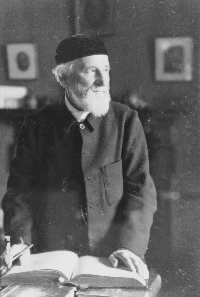
"Everything in the varying human affairs is due to chance, according to Aristotle, to the Divine Will alone according to the Ashariyah, to Divine Wisdom according to the Mu'tazilites, to the merits of man according to our opinion. It is therefore possible, according to the Ashariyah, that God inflicts pain on a good and pious man in this world, and eeps him forever in fire, which is assumed to rage in the world to come; they simply say it is the will of God. The Mu'tazilites would consider this an injustice, and therefore assume that every being, even an ant, that is stricken with pain, has compensation for it... and it is due to God's Wisdom, that a being is struck and afflicted in order to receive compensation. We, however, believe that all these human affairs are managed with justice; far be it from God to do wrong, to punish any one unless the punishment is necessary and merited. It is distinctly stated in the Law, that all is done in accordance with justice; and the words of our Sages generally express the same idea."

React to this quote
More by Maimonides
See allResonant Thoughts
"Resignation as to knowledge of the world is for me not an irretrievable plunge into a scepticism which leaves us to drift about in life like a derelict vessel. I see in it that effort of honesty which…"
"The barbarities and desperate outrages of the so-called Christian race, throughout every region of the world, and upon every people they have been able to subdue, are not to be paralleled by those of …"
Explore Further
Related Quotes
"The values of Western civilization are not just different, they're better. I know a whole generation has be…"
— Bill Maher"This is not just a gun control issue. It's a national security issue."
— Tom Diaz"Gottfried Feder gave the Nazi Party an ideology. Its essential points were paramount State ownership of lan…"
— Gottfried Feder"It's a tragedy what is happening, what Bush is doing. All Bush wants is Iraqi oil. There is no doubt that t…"
— Nelson Mandela"On condition that you protect my rights, I will protect your rights. How, then, does some party obtain the …"
— Johann Gottlieb Fichte"None are more unjust in their judgments of others than those who have a high opinion of themselves."
— Charles Spurgeon