#success

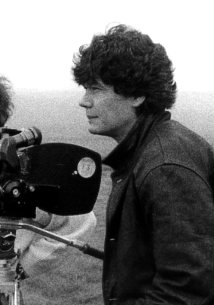
"I don’t like making didactic, pedagogical documentaries based on standard formulas of narration: I'm only interested in the ambitious French tradition of the documentaire de création where the film, if successful, is not about something but that something itself. The goal is to incorporate areas of risk and paradox that we associate with cinematic art."
React to this quote

More by Damian Pettigrew

See all

“To my delight, Federico had seen Dans la ville blanche by Swiss director Alain Tanner. Enthusiastic about Bruno Ganz’s performance, he also was impressed by the film’s startling visual poetry of Lisbon achieved by transferring inferior film stock onto 35mm. It was exactly this kind of uncomplicated technical innovation that inspired Federico during the writing of Attore. Conceived in 1992, Attore focused on the craft and the psychology of actors. Having completed a film treatment with roles for Mastroianni, Giulietta Masina, and Paolo Villagio, Fellini was now wondering if he should provide Marcello with a home movie camera to be used in a loosely Shakespearian sense that all the world’s a film set. The 8mm footage of intimate memories of the theatre from his Rimini childhood would then be transferred to 35mm – a most intriguing idea that would have been a new departure for the Maestro had he lived to bring it to the screen.”

“With a few exceptions, Fellini's films have failure and despair running through them: Life continues, but I can't imagine 'Felliniesque' as an exclusively uplifting adjective. Fellini's best films are the ones that distill this essence -- the paradoxical quality of melancholic ecstasy, a surreal, bittersweet vitality -- to perfection.”

“In a synchronistic way, the Jungian term of great significance for Carolyn Carlson, her art is in accord with Hölderlin's phrase, "Poetically, man dwells on this earth." After the century of Fascism, we enter the brave new world of the digital era where bombs are grafted inside the body in a corruption of the word spiritual that Malraux never imagined. For Carlson, the question is no longer, "How to live together?" but rather, "How to live poetically our dwelling place?”

“The first documentary I saw as a child was Robert Flaherty’s Nanook of the North broadcast one Sunday afternoon. Nanook enchanted me by his courage to smile in a frozen wasteland, and by the simple fact that he wore a fur coat rather than a military uniform: this gentle hunter wasn’t a conqueror. Later, I understood how great Flaherty was: he told a timeless story without using commentary or pedagogues, and he didn’t interview Nanook like a celebrity or an aggressive talk-show host. He remained off-screen, observing and listening to create that exceptional complicity we feel in this documentary that eschews didacticism. The emotion of life found its counterpart in the emotion of art - a rare and precious achievement in a genre that is often limited to the emotion of the informational narrative.”

“Italo Calvino said the artist reveals that bit of truth hidden at the bottom of every lie. Art is all about the art of lying. The artist’s imperative is to create a supreme fiction, a lie that, paradoxically, discloses a truth. It's precisely this kind of paradox that Calvino and Fellini adored.”

“It was Italian playwright and screenwriter Ennio Flaiano who first spoke to Fellini of Fernando Pessoa during their collaboration on I Vitelloni . Fellini claimed, however, that it was not until he lunched with Anthony Burgess in the mid 1970s that he began reading the Portuguese poet in earnest. This is not to suggest that Pessoa influenced Fellini in any direct way but simply to note a genial coincidence embedded within two autobiographical masterpieces. The first quotation is from Pessoa’s O Livro do desassossego: ‘These are my Confessions, and if in them I say nothing, it’s because I have nothing to say.’ The second is from Fellini’s Otto e mezzo during the crucial night scene at the base of the scaffolding when Guido confesses to Rosella, “I have really nothing to say in my film. But I want to say it anyway.” Suddenly, the disparate obsessions of these two great Mediterranean minds seem to fold into one another, if only for an instant, like the sounds of vibrating wires touched simultaneously. Whatever the ultimate significance may be, it amuses me to think that textual coincidences of this nature are proof of the brotherhood of artists.”
