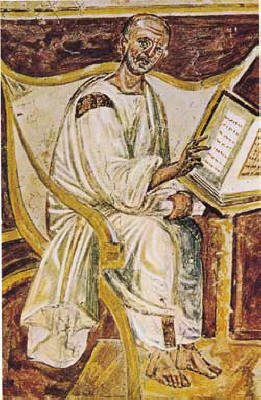
"Christ’s whole body groans in pain. Until the end of the world, when pain will pass away, this man groans and cries to God. And each one of us has part in the cry of that whole body. Thou didst cry out in thy day, and thy days have passed away; another took thy place and cried out in his day. Thou here, he there, and another there. The body of Christ ceases not to cry out all the day, one member replacing the other whose voice is hushed. Thus there is but one man who reaches unto the end of time, and those that cry are always His members."
React to this quote
More by Augustine of Hippo
See allResonant Thoughts
"I've always wanted to go to England; I've always felt a tremendous drawing to England — especially the Elizabethan period. I felt I was familiar with a lot of it — more than what I was familiar with f…"
Explore Further
Related Quotes
"Good evening. Mr. Edward R. Murrow, Educational Director of the Columbia Broadcasting System, devoted his p…"
— Joseph McCarthy"The equal rights of man, and the happiness of every individual, are now acknowledged to be the only legitim…"
— Thomas Jefferson"It is everywhere. In a few years, it has metastasized like a cancer, on all continents... The disease, expr…"
— Gilbert Mercier"New technologies are enhancing the market power of incumbent, dominant firms, such as Microsoft, which are …"
— Joseph Stiglitz"Success is full of promise till men get it; and then it is last year's nest from which the bird has flown."
— Henry Ward Beecher"The only time I'll wear depend is when I'm 70 years old. That's when I can't hold my shit within so I shit …"
— Lil Wayne



