#power
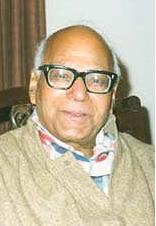
"India's education had two aims, both organically linked. One was to strengthen our body and mind, our nerves and vitality. If the Indian teaching on this subject is followed faithfully, it ensures full, vigorous, healthy and long life. Similarly, it ensures health and unimpaired senses and a mind with undiminished powers. According to the Hindu Psychology, a man's mind and senses are powers of the soul. Therefore, they should be strengthened, widened, deepened, purified. "May I see and hear clearly and abundantly", is the repeated prayer in the, several Upanishads. Another variant of this prayer is: "May our eyes see the good, our ears hear the good." To see and hear and desire better, purer, finer and deeper is the first aim of Indian education. This means strengthening character, controlling desires and impulses, increasing powers of concentration and will. Not only this opens up our hidden powers, but this is even the basis of any fruitful life at all. If our senses and mind run their unbridled course, uninformed by any higher light, they will lead to self-destruction. But purified in the light of the soul, they become a blessing."
React to this quote
More by Ram Swarup
See allResonant Thoughts
Explore Further
Related Quotes
"Until the Chinese are more cooperative with us in specific areas, maybe we’ve made a mistake in growing Chi…"
— Michael Pillsbury"Lord without Thee I can do nothing; with Thee I can do all. Help me by Thy grace, that I fall not ; help me…"
— Edward Bouverie Pusey"...either the Universe was One, or it was two, or it was many; either Energy was one, seen only in powers o…"
— Henry Adams"We are entering the dimension where we have control - the inside."
— Byron Katie"Turkey is a big and powerful country. We are a small and weak country. But whenever Turkey needs, we will b…"
— Edi Rama"Everything is overshadowed by the impending trial of will-power which is developing in Europe. I think we s…"
— Winston Churchill





