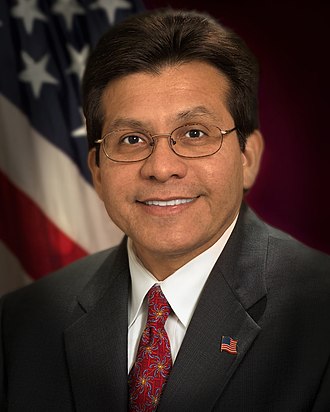
"Torture is not tolerated by this country on the battlefield or off. Anyone who tortures or abuses a detainee tarnishes the service of every honorable student and soldier in this room today. The President has said this, and I will say it again: those who commit torture in the name of the United States government will be prosecuted. In any discussion of Guantanamo, detainees and military commissions, I think that one final fact helps put things in perspective — and that is the fact that members of al Qaeda are not merely common criminals. Some critics around the world have argued that they are “just” criminals, that their crimes somehow do not amount to war crimes. But here are the facts: al Qaeda seeks to employ weapons of mass slaughter as a means of achieving political goals against both the civilian and military capacity of the United States, Europe, and our allies throughout the world. Its members continue to fight our Armed Forces on battlefields around the world, and they will continue to do so until we stop them. Al Qaeda has committed acts on a scale that transcends mere crime, as recognized by NATO immediately after the attacks of September 11th. Their crimes are therefore nothing less than war crimes. Given the magnitude of the atrocities al Qaeda has committed, there can be no comparison between the crimes of its members and that of common civilian criminals."
React to this quote
More by Alberto Gonzales
See allResonant Thoughts
"Today, you see a generation of young Iranians who are committed to fight even if it means risking and losing their lives to ultimately get rid of this regime and achieve full freedom. This is no longe…"
Explore Further
Related Quotes
"I had seen him from a distance This was going to be the first personal contact. As I ascended the stairs of…"
— Gulzarilal Nanda"We are told we are fighting terrorists. The real terrorist was me. And the real terrorism is this occupation."
— Michael Prysner"Why hasn't the administration made more of the U.N. Inspector's report that says Saddam Hussein was dismant…"
— Jeff Gannon"Nuclear weapons are obsolete in an era of asymmetric warfare and cyber warfare and have no placed in a Euro…"
— Molly Scott Cato"President George W. Bush, who dodged danger in the Vietnam War by signing up for the Texas National Guard a…"
— Dave Lindorff"Words during battle, Quoted in Francis Parkman's Wolfe"
— James Wolfe


