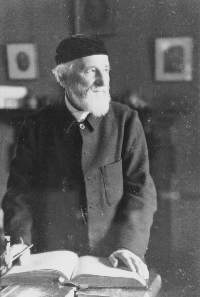
"Some have recently argued that pluralism by its very nature demands civic secularism. There seems to be no logical reason why respect for the beliefs of more than a quarter billion Americans, 90 percent of whom declare themselves to be religious, should require us now to eschew the public expression of religion, even in discussing political affairs that have moral foundations or implications."

React to this quote
More by Francis George
See allResonant Thoughts
"“There is no point in erecting a structure,” said Muzzlehatch, taking no notice of Titus’s question, “unless someone else pulls it down. There is no value in a rule until it is broken. There is nothin…"
Explore Further
Related Quotes
"Human beings seem to be far more autonomous and self-governed than modern psychological theory allows for."
— Abraham Maslow"There is not a more unhappy being than a superannuated idol."
— Joseph Addison"Whoever in our government leaked that information is guilty of treason, and I think anything less than exec…"
— Mike Huckabee"There can be no doubt that Saddam Hussein has biological weapons and the capability to rapidly produce more…"
— Colin Powell"These attacks were open, unchecked and of the nature of a thorough extermination-the methods being everywhe…"
— Gurbachan Singh Talib"The Pilgrim holds with St. Augustine Absolute Evil is impossible because it is always rising up into good. …"
— Richard Francis Burton