#justice
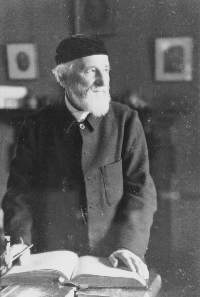
"Especially do the evils of the times, the folly and blindness of the masses, the injustice of rulers, the perversion of religion in unfruitful ceremonialism work upon the souls more finely attuned as a stimulus and spur; the feeling of the evil stirs their moral judgment or conscience to the criticism of the existing situation, and out of the criticism there grows for them the new ideal which impresses itself upon them as the truth that has the power to save from the corruption of the time; and while they first raise themselves to this ideal, they also win power and courage to draw others toward it. Thus they become the proclaimers of a higher truth which, over against the antecedent error, appears as something wholly new, as a revelation from above, but which is, indeed, nothing else than a higher development of the impulse toward truth and righteousness that is a natural quality of the human mind."

More by Otto Pfleiderer
See allResonant Thoughts
"Some imagine that science is limited to the lower sorts of natural facts only. Religious and moral facts have been too little heeded by our scientists. Thus people came to think that science and relig…"
— Paul Carus
Philosophy1852–1919
Explore Further
Related Quotes
"Justice, sir, is the great interest of man on Earth. It is the ligament which holds civilized beings and ci…"
— Daniel Webster"The underlying principle of Balance in Nature’s One Law is equality of interchange between the pairs of opp…"
— Walter Russell"Laws that oppress people have no moral authority."
— Richard Stallman"'... we have to be kind, we have to be charitable and we can't condemn people just because they get in a me…"
— Susan Howatch"Men of most renowned virtue have sometimes by transgressing most truly kept the law."
— John Milton"I just don’t like it, for extremely large values of don’t and like."
— Charles Stross