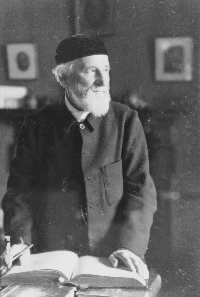
"He who loves God is also able to accept life and to love it. This is not the same as to love God. For many pious people in all generations the love of God is the other side of the hatred for life. And there is much hostility towards life in all of us, even in those who have completely surrendered to life. Our hostility towards life is manifested in cynicism and disgust, in bitterness and continuous accusations against life. We feel rejected by life, not so much because of its objective darkness and threats and horrors, but because of our estrangement from its power and meaning. He who is reunited with God, the creative Ground of life, the power of life in everything that lives, is reunited with life. He feels accepted by it and he can love it. He understands that the greater love is, the greater the estrangement which is conquered by it. In metaphorical language I should like to say to those who feel deeply their hostility towards life: Life accepts you; life loves you as a separated part of itself; life wants to reunite you with itself, even when it seems to destroy you."

React to this quote
More by Paul Tillich
See allResonant Thoughts
"Good marriages seem to function something like a buddy system-- the people in them swim in their own waters but keep a protective eye on each other, and should the whistle blow, turn up quickly to hol…"
Explore Further
Related Quotes
"Go out to the last few grains of sand, the smartest of the smartest of the smartest, times a thousand. It m…"
— Austin Grossman"An artist must possess consummate technique in order to make us forget it."
— Auguste Rodin"Guppy, Shusha . "Tom Stoppard, The Art of Theater No. 7", Paris Review interview"
— Tom Stoppard"respect both the integrity of the single market... and the Good Friday Agreement in all its parts"
— Michel Barnier"Weather is a literary specialty, and no untrained hand can turn out a good article on it."
— Mark Twain"All things are changing; and thou thyself art in continuous mutation and in a manner in continuous destruct…"
— Marcus Aurelius