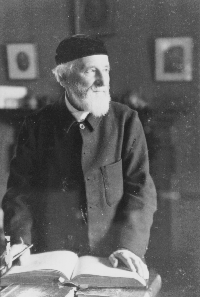
"Pietism and methodism reemphasized personal guilt, personal experience, and individual perfection. They were not intended to deviate from ecclesiastical conformity, but unavoidably they did deviate; subjective piety became the bridge of the victorious reappearance of autonomous reason. Pietism was the bridge to Enlightenment. But even Enlightenment did not consider itself individualistic. One believed not in a conformity which is based on biblical revelation but in one which should be based on the power of reason in every individual. The principles of practical and theoretical reason were supposed to be universal among men and able to create, with the help of research and education, a new conformity."

React to this quote
More by Paul Tillich
See allResonant Thoughts
"I know I shall be called heterodox, and that unseen lightning flashes and unheard thunderbolts will be playing around my head, when I say that women will never be profound students in any other depart…"
"And here I cannot help mentioning a very ridiculous show of a learned pig, which of late days attracted much of the public notice, and at the polite end of the town. This pig, which indeed was a large…"
Explore Further
Related Quotes
"Conceptual graphs are system of logic based on the existential graphs of Charles Sanders Peirce and the sem…"
— John F. Sowa"With a choked cry the Englishman woke from his trance of horror, drew and fired at a darting flame-eyed sha…"
— Robert E. Howard"An organization comes into being when there are persons able to communicate with each other who are willing…"
— Chester Barnard"I've stopped smoking... I think the cost was a lot of it, and not being able to breathe. I first gave up sm…"
— Dave Allen"I see that not everyone in the West has understood that the Soviet Union has disappeared from the political…"
— Vladimir Putin"There is nothing more dangerous to the shackles of complacency and the warden of fear than philosophy in ac…"
— Steve Maraboli