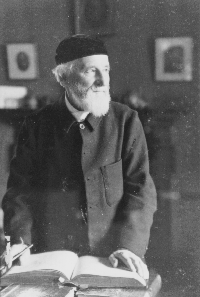
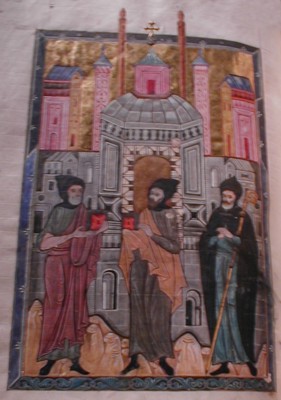
"Muhammad seduced the people by promises of carnal pleasure to which the concupiscence of the flesh goads us. His teaching also contained precepts that were in conformity with his promises, and he gave free rein to carnal pleasure. In all this, as is not unexpected, he was obeyed by carnal men. As for proofs of the truth of his doctrine, he brought forward only such as could be grasped by the natural ability of anyone with a very modest wisdom. Indeed, the truths that he taught he mingled with many fables and with doctrines of the greatest falsity. He did not bring forth any signs produced in a supernatural way, which alone fittingly gives witness to divine inspiration; for a visible action that can be only divine reveals an invisibly inspired teacher of truth. On the contrary, Muhammad said that he was sent in the power of his arms—which are signs not lacking even to robbers and tyrants. What is more, no wise men, men trained in things divine and human, believed in him from the beginning, Those who believed in him were brutal men and desert wanderers, utterly ignorant of all divine teaching, through whose numbers Muhammad forced others to become his followers by the violence of his arms. Nor do divine pronouncements on the part of preceding prophets offer him any witness. On the contrary, he perverts almost all the testimonies of the Old and New Testaments by making them into fabrications of his own, as can be seen by anyone who examines his law. It was, therefore, a shrewd decision on his part to forbid his followers to read the Old and New Testaments, lest these books convict him of falsity. It is thus clear that those who place any faith in his words believe foolishly."

React to this quote
More by Thomas Aquinas
See allResonant Thoughts
"I wish that I could believe not in mortality but in reincarnation or individual immortality; I wish that I could be living again in another body or, God help me, even watching from the edge of a fleec…"
"I hope that I will be the last victim in China's long record of treating words as crimes. Free expression is the base of human rights, the root of human nature and the mother of truth. To kill free sp…"
Explore Further
Related Quotes
"Power kills, absolute Power kills absolutely. This new Power Principle is the message emerging from my prev…"
— Rudolph Rummel"The nation yesterday was awaiting a clear, statesmanlike call from the Chancellor of the efforts and, if ne…"
— Harold Wilson"Who, then, is right? How can we all be right? Half of our wise men declare that the world is going straight…"
— Henry Adams"The idea that in order to get clear about the meaning of a general term one had to find the common element …"
— Ludwig Wittgenstein"If you are wise, Matson said to himself grimly, you never take one-way trips. Anywhere. Even to Boise, Idah…"
— Philip K. Dick"It is not wisdom but folly to assume that all the chances are going to favour the enemy. ... It is admitted…"
— Arthur Balfour