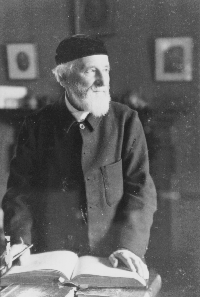
"As there is a difference between works of nature and productions of human handicraft, so there is a difference between God's rule, providence, and intention in reference to all natural forces, and our rule, providence, and intention in reference to things which are the objects of our rule, providence, and intention. This lesson is the principal object of the whole Book of Job; it lays down this principle of faith, and recommends us to derive a proof from nature, that we should not fall into the error of imagining His knowledge to be similar to ours, or His intention, providence, and rule similar to ours. When we know this, we shall find everything that may befall us easy to bear; mishap will create no doubts in our hearts concerning God, whether He knows our affairs or not, whether He provides for us or abandons us. On the contrary, our fate will increase our love of God; as is said in the end of this prophecy: "Therefore I abhor myself and repent concerning the dust and ashes" ; and as our Sages say: "The pious do everything out of love, and rejoice in their own afflictions." If you pay to my words the attention which this treatise demands, and examine all that is said in the Book of Job, all will be clear to you, and you will find that I have grasped and taken hold of the whole subject; nothing has been left unnoticed, except such portions as are only introduced because of the context and the whole plan of the allegory. I have explained this method several times in the course of this treatise."

React to this quote
More by Maimonides
See allResonant Thoughts
"The cultural tradition of which the Greek language is the focal point has the longest unbroken history of any in Europe. The Greek state, however, was newly born out of the conflict of 1821-8 and was …"
Explore Further
Related Quotes
"I stood willingly and gladly in the characters of everything — other people, trees, clouds. And this is wha…"
— Mary Oliver"If we can take the time to mute the noise we’ve build around ourselves the rhythm of the heartbeats and the…"
— Dawud Wharnsby"When I hear of anyone walking into a lab and walking out with animals, my heart sings."
— Ingrid Newkirk"Narcissism: when one grows too old to believe in one's uniqueness, one falls in love with one's complexity."
— John Fowles"I have been a passionate animal activist for many years now. It's something I believe in and I feel strongl…"
— Charlotte Ross"Reservation's mandatory for them to keep out vultures. Portrayed images, makes it hard to get to know us. T…"
— Marcus Orelias