#knowledge
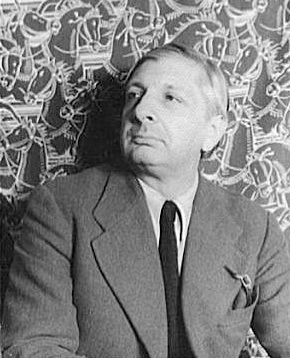
"My recollection of meeting him outside of this one incident, was at a show that John Graham did at the MacMillin Gallery . He invited someone called Jackson Pollock and myself, and, I believe, de Kooning. There were three unknown Americans put into that show and it turned out we were the three and it was through that source, my trying to track down the other unknown American who was painting abstractly at that point, as though I knew them all in New York City.. ..and I promptly went up to Pollock's studio and that's when I say I met Pollock for the first time.. ..And then, you see, after I saw Pollock, met him, saw the work, I said, "I understand the third painter is de Kooning," and he said he didn't know de Kooning and I said, "Well, I do and I'll take you over and introduce you." So I brought Pollock up to de Kooning's studio. De Kooning was in a loft at that time because he was something, and that is how Pollock met De Kooning."

React to this quote
More by Lee Krasner
See allResonant Thoughts
Explore Further
Related Quotes
"The Lord did not come with the armies of heaven, in power and great glory, nor send His messengers panoplie…"
— Brigham Young"An inch of foreknowledge is worth ten miles of after-thought."
— Jack Vance"Some Basic Assumptions. We are entering upon a course of study wherein the entire tendency will be to throw…"
— Alice Bailey"As long as poets belonged to a broader class of artists and intellectuals, they centered their lives in urb…"
— Dana Gioia"We are a nation crying out for security, equity, and justice. We need. We need good jobs. We need quality p…"
— William Barber II"The Nicomachean Ethics is only intended as a guide for politicians, and they are only concerned to know wha…"
— J. L. Austin