"A foreigner is a man who laughs at everything except jokes. He is perfectly entitled to laugh at anything, so long as he realises, in a reverent and religious spirit, that he himself is laughable. I was a foreigner in America; and I can truly claim that the sense of my own laughable position never left me. But when the native and the foreigner have finished with seeing the fun of each other in things that are meant to be serious, they both approach the far more delicate and dangerous ground of things that are meant to be funny. The sense of humour is generally very national; perhaps that is why the internationalists are so careful to purge themselves of it. I had occasion during the war to consider the rights and wrongs of certain differences alleged to have arisen between the English and American soldiers at the front. And, rightly or wrongly, I came to the conclusion that they arose from the failure to understand when a foreigner is serious and when he is humorous. And it is in the very nature of the best sort of joke to be the worst sort of insult if it is not taken as a joke."
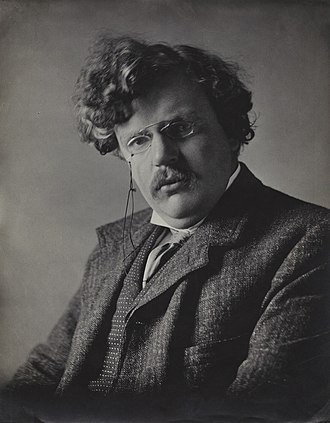
React to this quote
More by G. K. Chesterton
See allResonant Thoughts
"Here is a doctrine at which you will laugh. It seems to me, Govinda, that Love is the most important thing in the world. It may be important to great thinkers to examine the world, to explain and desp…"
Explore Further
Related Quotes
"Interview: A contemporary translator, Ádám Nádasdy, compares his own translations of Shakespeare with the t…"
— János Arany"'Cause I'm a street genius, with a unique penis, got fly chicks on my dick that don't even speak English"
— Big L (rapper)"I got a scope on the barrel thats a hammer with a camera"
— Lil Wayne"He opened his eyes and looked down at his pale chest With the two lone hairs that were a sardonic last fare…"
— Fritz Leiber"The fact that certain composers have been able to create first-class music within the medium of film proves…"
— Jerry Goldsmith"With that, he scribbled in an additional ninety thousand dollars on the estimate, which had waxed to the gi…"
— Woody Allen





